

A recent study conducted by a biologist from Trent University indicates that Toronto should reconsider its methods for managing coyotes, a suggestion that has sparked concern among some animal advocates.
Dennis Murray, the primary author, advocates for the euthanization of coyotes that consistently cause disturbances. He believes the city delays taking this action, hoping that the troublesome coyote will vacate the area on its own.
“Currently, the approach seems to be to ignore the issue and wish for a positive outcome,” Murray remarked regarding the city’s coyote coexistence and response strategy, which was approved by the council just last year.
Toronto has seen an increase in encounters between humans and coyotes recently, especially in the downtown areas of Liberty Village and Fort York.
Since 2020, city officials report nine incidents of coyote bites on humans in Toronto, along with numerous attacks on dogs, some resulting in fatalities.
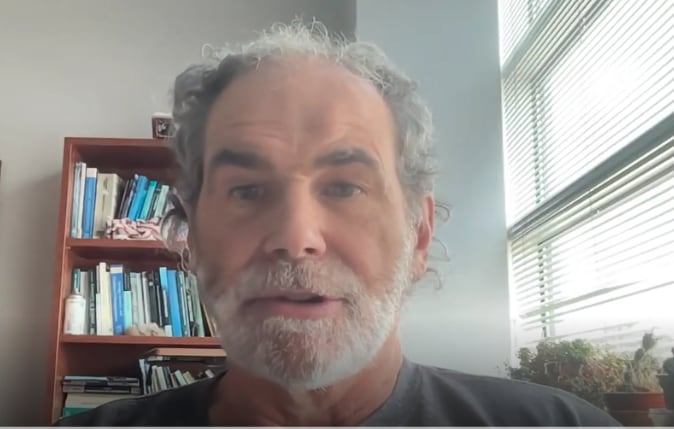
Prof. Dennis Murray, of Trent University, states that his research incorporates data from various researchers and municipalities across North America, concluding that municipalities often delay the euthanization of problematic animals in hopes that the issue will resolve itself. (Zoom)
“Efforts to remove coyotes in North America have historically proven to be expensive, ineffective, and sometimes counterproductive,” city spokesperson Mahreen Dasoo noted in an email.
“Removal does not tackle the underlying reasons for the conflicts between problematic coyotes and humans.”
While there have been no human attacks in Toronto this year, the Greater Toronto Area experienced three coyote bites last month, including one incident involving a toddler in Whitby who sustained serious facial injuries.
Following a series of dog attacks in Liberty Village last year, the city identified four specific coyotes, two of which were euthanized. The remaining two coyotes left the area, according to a city announcement made in May 2025.
A month later, the city completed its revised coyote response plan, which emphasizes public education regarding coyote behavior and aversion techniques.
The updated strategy describes aversion or hazing techniques, which may include waving colored garbage bags at an approaching coyote, shouting, clapping, using a whistle, waving a cane, or throwing a tennis ball or small objects towards the animal.
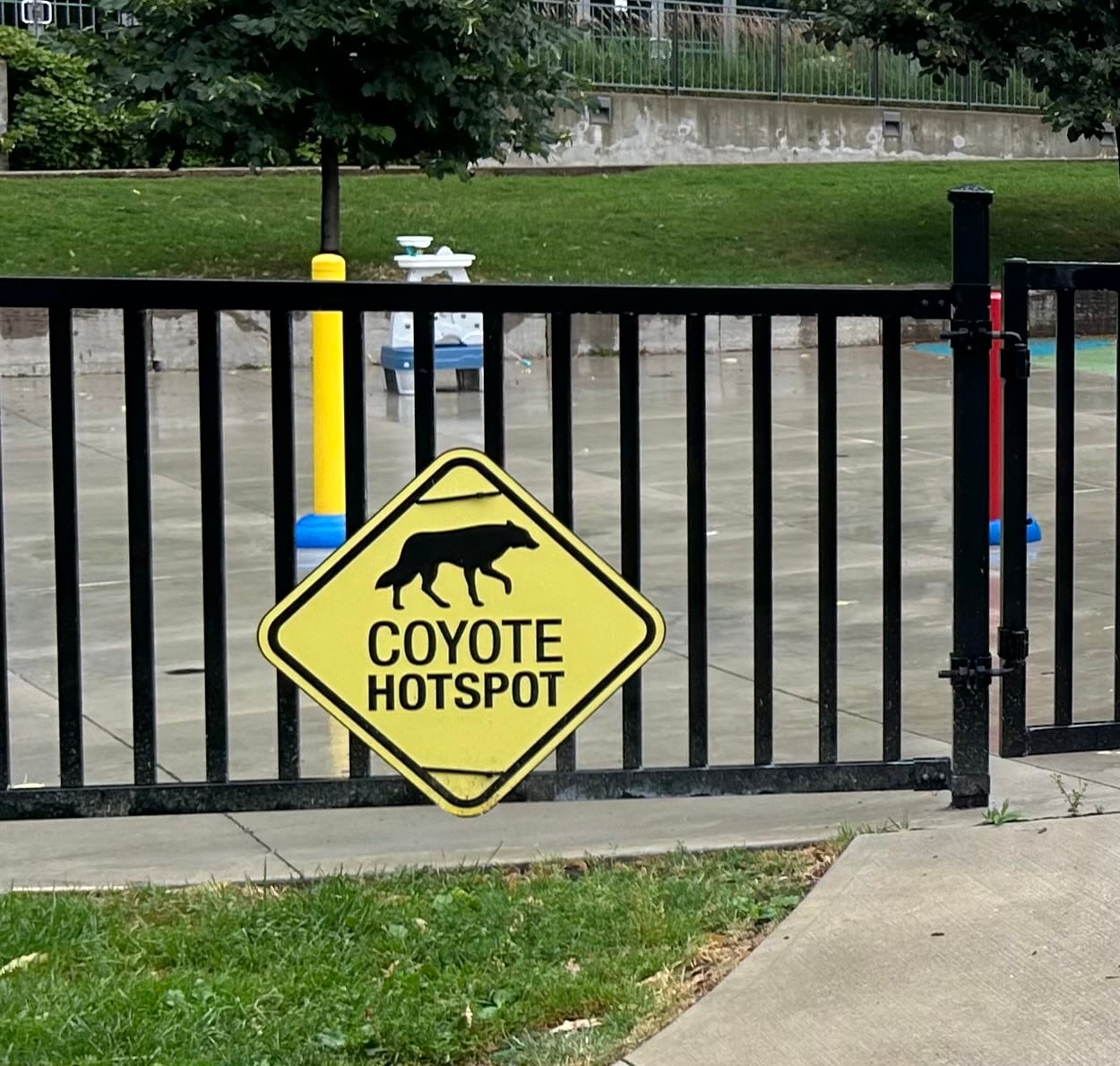
A sign indicating coyote sightings is posted on the fence of a playground in a downtown Toronto park. Raising public awareness of such sightings is an element of the city’s coyote awareness initiative. (Mike Smee/CBC)
However, in his peer-reviewed study published on July 15 in the journal Frontiers in Ecology and Evolution, Murray argues that hazing techniques often prove ineffective in keeping coyotes away from humans and pets.
“Research shows that hazing leads to consistent avoidance only when applied rigorously and early in the habituation process, and even then, the results are usually temporary,” he explained in the paper he co-authored with two members of the Coyote Safety Coalition, a community group in Liberty Village advocating for more aggressive coyote removal measures.
The study also criticizes local governments for placing too much emphasis on coexistence rather than prioritizing public safety.
The updated city strategy presents a tiered framework for addressing coyote sightings in urban settings, categorizing encounters from simple sightings to attacks on humans.
Intermediary issues are also identified, each with suitable responses.
If a coyote enters someone’s yard, staff recommend hazing. If the animal pursues a human, they suggest “installing additional or customized coyote signage and considering public education sessions.”
In instances where a pet is attacked while on a leash, the advice is “proactive patrols or educational visits and/or closing off pathways or parks.”
In the most severe scenarios—such as an attack on a human—the strategy calls for a thorough investigation, including determining whether the attack was provoked. Possible responses in these cases include euthanization or relocation to a wildlife sanctuary.
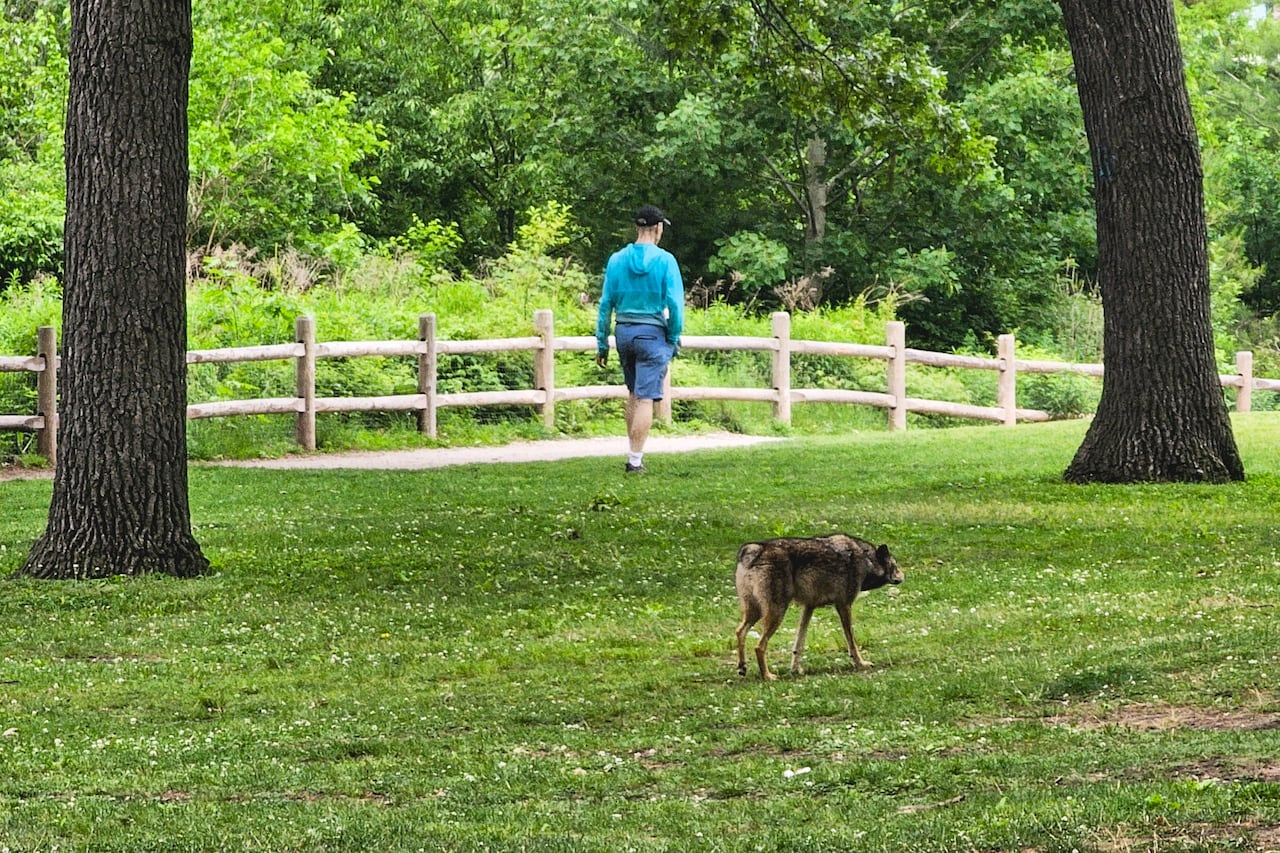
A coyote is spotted near a person in Toronto’s High Park on Wednesday, June 10, 2026. (Gio Ciampini/The Canadian Press)
In an interview with CBC Toronto, Murray expressed that the city’s strategy has not been effective, primarily due to the delay in euthanizing problem coyotes.
“No matter how much you wave a garbage bag at them, they won’t change their behavior,” he asserted. “At some point, more drastic measures must be taken to resolve this situation.”
Murray urged municipalities to utilize the insights from his study to create more effective coyote management strategies.
“Municipalities can equip themselves with better information for making timely and informed decisions,” he stated.
Opposition to Culls
Murray clarified that he does not support broad coyote culls; rather, he believes in identifying and euthanizing only those repeat offenders.
Dasoo reiterated to CBC Toronto that the city’s coexistence and hazing approach is effective.
“The city adopts a coexistence-focused method for coyote management, as evidence shows that long-term prevention, public education, reducing attractants, and aversion conditioning effectively help to maintain boundaries between humans and wildlife,” she noted.
“Coexistence programs are regarded as best practices in wildlife management and also benefit public health and the environment by allowing coyotes to fulfill their natural role in controlling rodent and small animal populations.”

Camille Labchuk, executive director of Animal Justice, argues that euthanizing coyotes is unjust, as their interactions with humans largely stem from habitat encroachment by people. (Mike Smee/CBC)
Animal rights organization Animal Justice has expressed skepticism regarding the paper’s findings.
Executive director Camille Labchuk stated that lethal measures are never justified, regardless of a coyote’s behavior in a community.
“It is unjust to kill coyotes for a problem largely caused by humans through habitat destruction,” she remarked in an interview with CBC Toronto.
Labchuk proposed that relocation could be a viable solution for overly aggressive coyotes.
However, the city’s new policy asserts that while relocation may be an option in other areas, it is generally not practical for Toronto.
Provincial regulations specify that wild animals cannot be relocated beyond a kilometer from where they are captured, and cities must seek provincial approval to transfer an animal to a sanctuary.
According to Murray, relocating coyotes often fails as they are naturally territorial and may return, and moving a troublesome coyote just shifts the problem to another municipality.

Dog walker Elanja Corosky expresses her reluctance to see any animals harmed, including coyotes, but believes measures should be taken to safeguard both vulnerable pets and coyotes that have occasionally attacked them. (Mike Smee/CBC)
In Liberty Village, Murray’s recommendations received a mixed response from dog owners interviewed by CBC Toronto.
Many, including Elanja Corosky, opposed euthanasia in general.
“As an animal lover, I don’t want to see any animal euthanized,” she stated, adding that this includes coyotes. “However, if they pose a greater threat, it becomes an issue that should be addressed.”