

Ashley MacIsaac, a musician who has won a Juno award, has decided to terminate his defamation lawsuit against Google regarding an AI-generated summary that incorrectly identified him as a sex offender.
The 51-year-old fiddler filed the civil suit in the Ontario Superior Court of Justice earlier this year after noticing that an AI overview featured prominently on Google’s search results falsely claimed he had been found guilty of multiple crimes, including sexual assault, internet luring, and attempting to assault a minor, while also stating that he was listed on the national sex offender registry, all of which were incorrect.
Originating from Cape Breton, MacIsaac was pursuing $1.5 million in damages from Google LLC.
The lawsuit indicated, “If a human representative made these defamatory statements on behalf of Google, a substantial punitive damages award would be justified. Google should not enjoy reduced liability simply because these false accusations were generated by software it developed and oversees.”
However, on July 29, a notice of discontinuance was submitted, bringing MacIsaac’s legal proceedings to a close. While he has not disclosed the reasons for his decision to drop the lawsuit, he told the National Post that he would not comment further. CBC News has attempted to obtain a response.
-
Cape Breton fiddler Ashley MacIsaac sues Google over alleged defamation
-
Ashley MacIsaac concert cancelled after AI wrongly accuses him of being sex offender
CBC News did not receive a response from Google regarding the discontinuation of the lawsuit.
In a statement released in December, Google Canada mentioned that its AI summaries change frequently to provide the most “helpful” information, and any inaccuracies are utilized to enhance the system.
MacIsaac’s withdrawn claim criticized Google for its “careless and apathetic reaction to the release of blatantly false statements,” asserting that he deserved a clear retraction.

Ashley MacIsaac performs during the East Coast Music Awards in Fredericton in 2022. The musician stated that the false claims caused him anxiety during performances. (Kelly Clark/The Canadian Press)
Google first began implementing AI overviews in 2024, which have since sparked controversy, leading to numerous lawsuits from companies and publishers who argue that the feature has diminished traffic to their websites and criticism from those who highlight that AI can often generate false information.
AI error led to cancelled concert
In December, MacIsaac revealed that he became aware of the misinformation, which he attributed to online articles about another individual in Atlantic Canada sharing his last name, after a concert of his was called off by the organizers citing the AI summary.
Following the incident, MacIsaac expressed that he experienced intense anxiety during subsequent performances, concerned that some audience members might have seen the AI summary and that his safety could be at risk.
In December, MacIsaac informed CBC News that while he was unable to afford legal action against Google, several law firms had contacted him offering pro bono assistance.
Justin Safayeni, an attorney at Stockwoods LLP in Toronto who focuses on defamation cases, explained to CBC News that there are various reasons a plaintiff might choose to withdraw a lawsuit prior to trial: they might have exhausted their financial resources, deemed the case unwinnable or not worth their time, or opted for a private settlement with the opposing party.
Discontinuation differs from dismissal in that it allows for the possibility of reviving the case later, provided there is no related settlement that prohibits it, he noted.
Courts grapple with question of responsibility
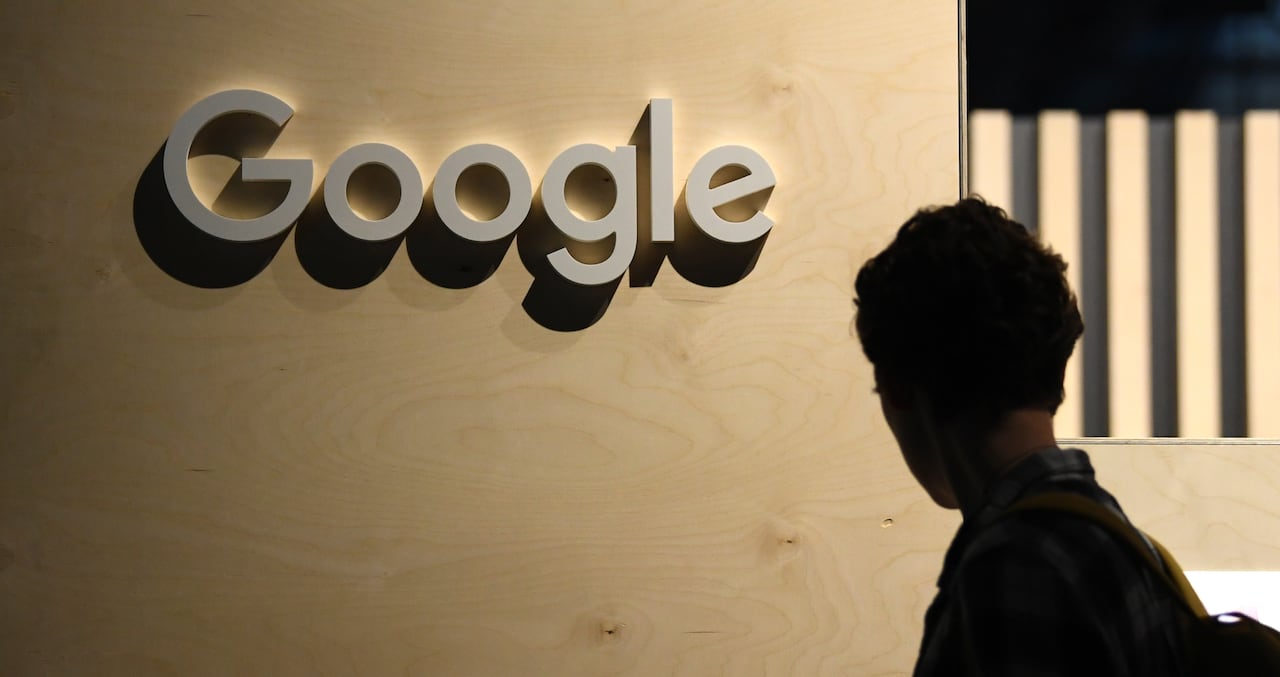
Google Canada previously stated in December that its AI summaries change frequently to provide the most ‘helpful’ information, and any errors are utilized to enhance the system. (Annegret Hilse/Reuters)
The issue of who is accountable for damage caused by false information generated by AI remains a pressing concern for technology giants advancing this technology.
Earlier this summer, a Munich court delivered a significant ruling, determining that Google bears legal responsibility for false information included in its AI-generated summaries.
The court ruled that AI overviews were considered Google’s proprietary content. The two German publishers involved in the case argued that Google’s AI overviews had associated them with scams and promoted questionable business practices. Google announced in June that it intended to contest the ruling.
In 2024, Air Canada attempted to argue that its AI chatbot was a separate legal entity accountable for its own actions when facing a lawsuit due to false information provided to a customer. The airline was mandated to take responsibility and provide compensation.
One reason MacIsaac’s case has garnered significant attention is that Canadian courts have not yet addressed the issue of liability concerning defamation arising from AI-generated statements, according to Safayeni. However, a resolution is forthcoming.
“Given the extent of AI tool usage, this matter will inevitably come before the courts,” he remarked.
OpenAI, the organization behind ChatGPT, acknowledged in a research document last year that there is currently no method to prevent AI large language models from generating false information, as these models are designed to produce only the most statistically probable responses without the ability to discern what is genuinely true or false.