

This summer, Nature NB is equipped with insect nets, vials, and a cooler that maintains a controlled temperature as they explore Fredericton to gather information on a crucial yet underappreciated neighbor: the native bumblebee.
The conservation organization is conducting its inaugural season of field surveys aimed at monitoring bumblebee species within the capital.
This initiative, created by the Mi’kmaq-led Unama’ki Institute of Natural Resources located in Cape Breton, seeks to develop a thorough mapping of bumblebee habitats and populations throughout New Brunswick and the greater Maritimes area.
“These sites have never been consistently surveyed,” stated Francie Morgan, a program coordinator for Nature NB spearheading this project. “As a result, we lack baseline data to evaluate the future state of our bumblebees.”
“Our goal is to lay the groundwork for conservation efforts, enabling us to make informed decisions about habitat protection.”
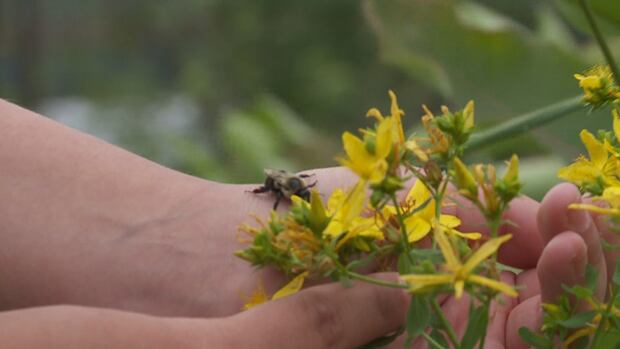
As New Brunswick works towards safeguarding endangered bumblebee species, the field surveys conducted by Nature NB demonstrate that establishing baseline data is essential for conserving local pollinators.
A key focus for her is to assist landowners and local municipalities in making more informed choices to safeguard pollinators.
Nature NB is collaborating with a growing provincial mapping initiative, alongside the Amlamgog (Fort Folly) Habitat Recovery team, who originally introduced the survey to New Brunswick, as well as EOS Eco-Energy and the Pays de Cocagne Sustainable Development Group.
Survey efforts
This summer, Morgan and her team are conducting surveys at three locations in three neighborhoods on the north side of Fredericton.
They identify each species on-site by analyzing the unique color patterns and shapes found on the bees’ thorax and abdomen.
Although the season is still in its early stages, Morgan recorded six distinct species during the first survey conducted in June. The province is home to 18 different bumblebee species.
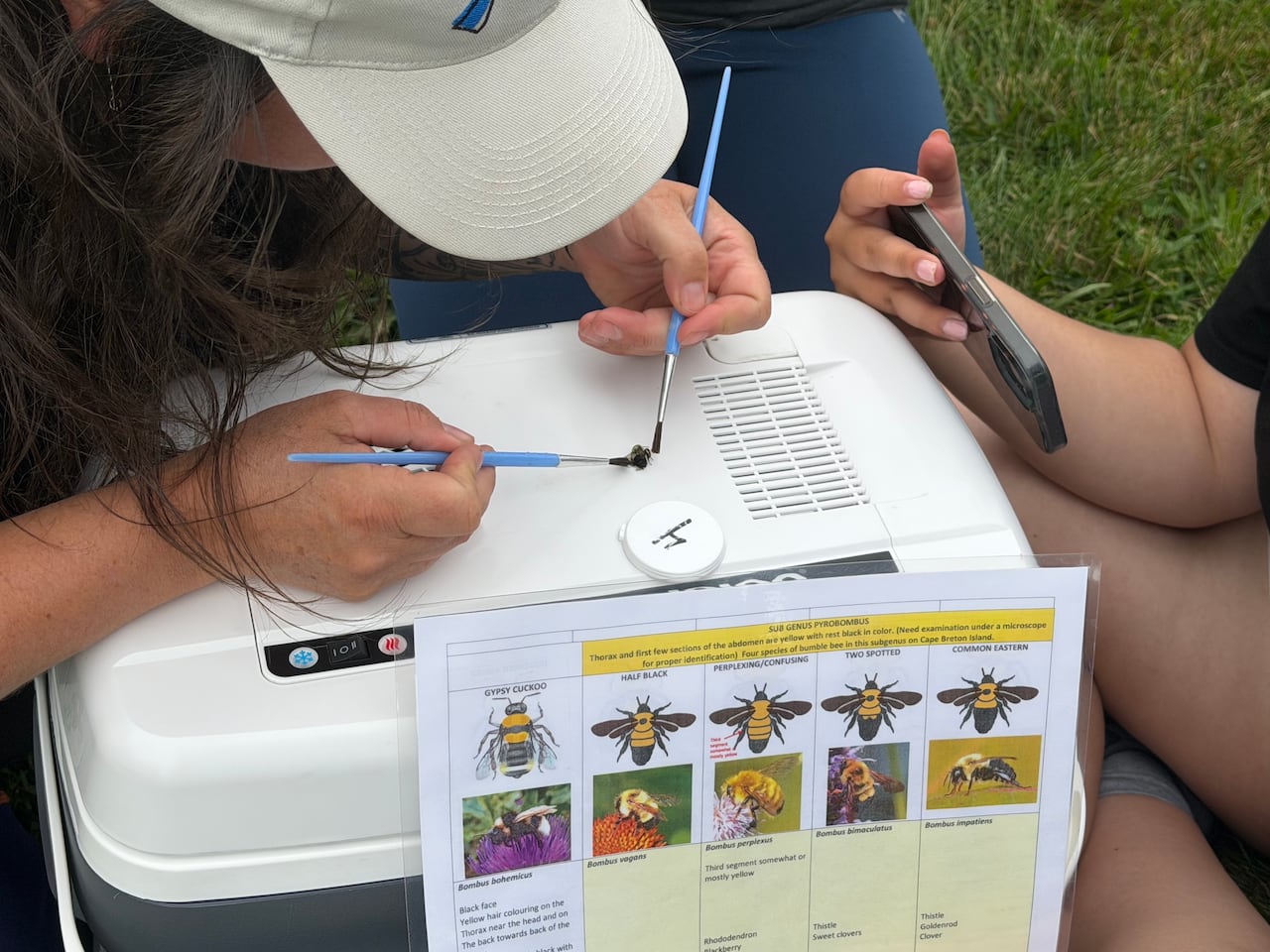
Francie Morgan, program co-ordinator at Nature NB, places the bumblebee into a state of torpor, allowing her to use paintbrushes to carefully reposition the bee for photographs. (Olivia Zhong/CBC)
The data gathered is shared with the Unama’ki Institute, the Atlantic Canada Conservation Data Centre, and iNaturalist, a globally accessible open-source database utilized by researchers worldwide.
“Researchers in Ontario could leverage that information to enhance their own conservation and research initiatives,” remarked Morgan.
“This is particularly vital for migratory species, such as monarch butterflies, but it is equally crucial for bumblebees, allowing us to determine which areas of our city effectively support pollinators.”
Morgan emphasized that protecting one species inherently benefits others.
“By safeguarding bumblebee habitats, we also protect the environments of wasps, monarchs, and hummingbirds, ultimately benefiting all creatures reliant on these species for sustenance,” she explained.
“The decisions we make regarding land protection create a ripple effect throughout the ecosystem.”
Nature NB’s initiative is timely, as the New Brunswick government has recently unveiled a draft recovery strategy for two endangered local bumblebee species: the Bohemian cuckoo bumblebee and the yellow-banded bumblebee.
The Bohemian cuckoo bumblebee had been considered extinct from 1980 to 2010 until it was rediscovered in northern New Brunswick in 2021.
The strategy now proposes a standardized monitoring system throughout the province.
“Transitioning from believing they were entirely absent in the province to having a few observed instances indicates a significant gap in our understanding of bumblebee populations,” said Shaylyn Wallace, species at-risk manager at the Department of Natural Resources.
She stated that accumulating more data on bee populations is vital for conservation efforts.
“We definitely need assistance from researchers and non-profit organizations to help us bridge these knowledge gaps.”
Native bumblebees have a crucial ecological role in maintaining the stability, resilience, and balance of surrounding ecosystems.

Shaylyn Wallace, species at-risk manager at the Department of Natural Resources, emphasized the need for better education regarding the significance of bumblebees in conservation efforts. (Olivia Zhong/CBC)
“Native bumblebees are essential for supporting native plant life, and this diversity in plant species contributes to a resilient and sustainable ecosystem, especially in the face of climate change and extreme weather conditions.”
For local community members eager to aid wild pollinators, Morgan suggests that the most effective steps begin at home by allowing yard spaces to grow wild.
“If everyone in a neighborhood decided to refrain from mowing just 50 square feet of their yard— or even a smaller area, such as five feet— those plants would collaborate with other patches of native flora to establish a foraging habitat for bumblebees.”