

On Wednesday, Jerome Powell announced his intention to remain on the board of the U.S. Federal Reserve after his term as chair concludes next month “for a period of time, to be determined.” He expressed concern that the “unprecedented” legal challenges posed by the Trump administration have jeopardized the independence of the nation’s central bank.
“I am concerned that these attacks are damaging this institution and threatening the aspects that are truly important to the public,” Powell stated during a press conference following the Fed’s decision to maintain its benchmark interest rate.
Powell’s choice to stay on the board marks the first occasion since 1948 that a Fed chair has continued as a governor, effectively preventing President Donald Trump from appointing someone to the central bank’s seven-member board. The Senate Banking Committee had previously cleared Powell’s prospective successor, Trump appointee Kevin Warsh, on a party-line vote.
Powell will likely serve as a Fed governor until January 2028. If confirmed, Warsh will replace Stephen Miran, a previous Trump appointee, whose term concluded in January.
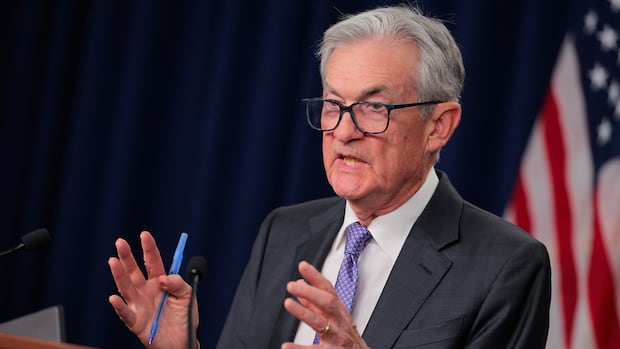
The initiation of a criminal investigation into U.S. Federal Reserve chair Jerome Powell has led to concerns among politicians regarding its implications for the autonomy of the entity responsible for the nation’s monetary policy.
Could disrupt Trump’s agenda
Powell’s decision may complicate Warsh’s ability to implement the rate reductions that Trump has sought, which Warsh had also supported last year, according to economists.
“This likely means Warsh will need additional time to cultivate the consensus he is aiming for,” noted David Seif, chief economist for developed markets at Nomura, an investment bank.
On Friday, U.S. Attorney for the District of Columbia Jeanine Pirro stated on X that her office was concluding its investigation into the Fed’s extensive building renovations, as the Fed’s inspector general would take over the review. However, she mentioned that her office could reopen the investigation if “the facts warrant doing so.” Additionally, Pirro had previously indicated intentions to appeal a court ruling that dismissed subpoenas issued by her office.
Powell stated on Wednesday that he had received assurances from the Justice Department that the appeal would not lead to the investigation’s reopening unless the Fed’s inspector general uncovered evidence of wrongdoing.
However, it appears that this did not provide Powell with the closure he believes is necessary.
“I am waiting for the investigation to reach a definitive conclusion with full transparency,” he remarked. “I will make my departure when I feel it is suitable to do so.”
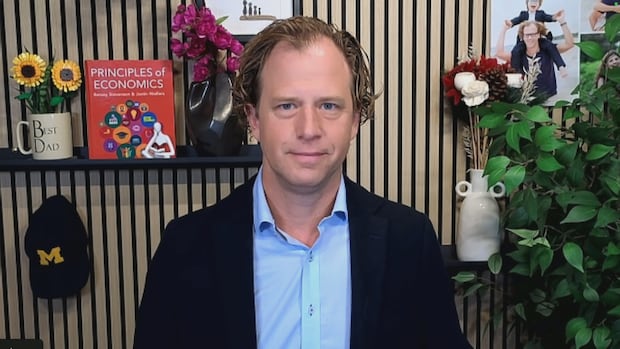
Economist Justin Wolfers argues that outside of the White House, ‘there’s not a person alive’ who views the threat of criminal charges against U.S. Federal Reserve Chair Jerome Powell as anything other than an effort to ‘intimidate’ him over interest rates. Wolfers compares the situation to Turkey, where a ‘populist strongman with his own peculiar economic ideas undermined the independence of the Turkish central bank’ — leading to soaring inflation.
Interest rate remains steady
On Wednesday, the Fed opted to keep its benchmark interest rate steady for the third consecutive meeting while indicating that rate cuts could still be on the horizon in the upcoming months, marking the most dissent since October 1992. Three officials expressed dissent regarding the decision to maintain the reference to a potential future cut, while a fourth, Miran, dissented in favor of an immediate rate decrease.
These disagreements highlight the division within the Fed’s 12-member rate-setting committee as Powell’s term as chair is set to conclude on May 15.
“Current events in the Middle East are contributing to significant uncertainty regarding the economic outlook,” the Fed stated in a release following its two-day meeting. “Inflation is high, partly due to the recent surge in global energy prices.”

Andrew Chang discusses why Trump is frustrated with Federal Reserve chair Jerome Powell and explores how he might attempt to remove him. Additionally, he examines how Canada’s geography and technology could assist in detecting missile threats and whether Trump can construct a Golden Dome without Canada.
Trump reacts
Late Wednesday, Trump took to his social media platform to respond to Powell’s announcement: “Jerome ‘Too Late’ Powell wants to continue at the Fed because he can’t find employment elsewhere — Nobody wants him,” Trump wrote, using his nickname for the Fed chair.
Warsh has pledged “regime change” at the central bank and may implement significant alterations to its economic models, communication methods, and balance sheet. He has advocated for rate reductions, aligning with Trump’s demands, but might find it challenging to execute these with inflation exceeding three percent, above the Fed’s target of two percent.
When questioned about Warsh’s capacity to withstand political pressure from Trump, Powell stated, “He presented his case very convincingly during his hearing, and I trust him.”
-
Trump selects former Fed official turned critic Kevin Warsh as his nominee for next chair
-
Analysis
Why the criminal investigation into the Fed chair crosses a crucial line for key Republicans
Powell’s decision to remain could exacerbate tensions with the Trump administration and create what some analysts describe as a “two Popes” situation, with both the current chair and a former chair on the Fed’s board. This scenario could heighten divisions among policymakers if some opt to align with Powell instead of Warsh.
Powell dismissed the idea that his continued presence would lead to discord, asserting, “My aim is not to interfere,” and later adding, “I do not intend to be a high-profile dissenter or anything of that nature.”
Nevertheless, Powell expressed that he remains troubled by the Fed’s independence from the White House, which he believes is vital for its ability to set rates that serve the public interest rather than responding to political pressures. Adjustments to the Fed’s short-term rate eventually influence the costs of mortgages, auto loans, and business financing.
He stated that the Fed’s independence is “at risk.” “We are having to turn to the courts to uphold our … capability to formulate monetary policy free of political influences. We have done so successfully thus far, but that situation is not resolved; none of it has come to a close yet.”
Scott Bessent, the treasury secretary, remarked in a Fox News interview aired Wednesday evening that Powell’s suggestion that other board members “do not care about the institution of the Fed” was “an insult.” Bessent characterized Powell’s choice to remain as “a breach of all Federal Reserve norms.”