

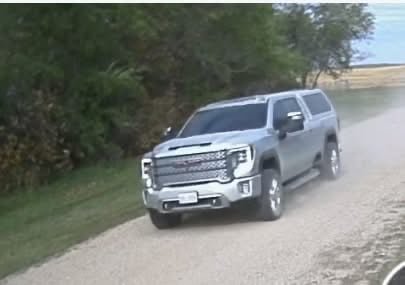
A discovery of 142 migratory birds’ bodies on private land near Saskatoon has sparked outrage among hunters and wildlife advocates in the region. The incident was reported on private property approximately 30 kilometers southeast of Saskatoon, near Patience Lake, on October 16. Authorities in Saskatoon have shared a photo of a truck believed to be linked to the case, but the culprits remain unidentified.
Conservation officers in Saskatoon have reached out to the public for help in identifying the truck. An independent tip line named SaskTips is offering a $2,000 reward for any information leading to an arrest.
Chris Maier, an inspector with the Conservation Officer Service, expressed disappointment at the incident, attributing such occurrences to irresponsible hunters who discard animals they have hunted. Maier highlighted that the fines for offenses like trespassing, littering, and failing to properly harvest animals, coupled with additional charges, could result in fines exceeding $20,000.
Jordan Rowswell, the proprietor of 12 Gauge Outfitting in Battleford, Saskatchewan, condemned the incident as a wasteful act that tarnishes the reputation of responsible hunters. Rowswell, who also sits on the board of the Saskatchewan Commission of Professional Outfitters, emphasized that licensed outfitting companies uphold high standards and would not engage in such unethical behavior.
According to Rowswell, hunters in Saskatchewan have various lawful options for handling surplus game, such as freezing the meat for later use or donating it to family and food banks.
Lack of restrictions on snow geese hunting
The discovery has raised concerns among social media users about freelance hunters who operate independently and the unrestricted accumulation of snow geese by some individuals. While hunters are limited to harvesting 20 snow geese per day, there is no cap on the total number they can possess due to the overabundance classification of snow geese and Ross’s geese by the Canadian government.
For other waterfowl species like mallards, pintail ducks, or Canada geese, hunters are restricted to collecting eight birds per day and possessing a maximum of 24 at any given time.
Of the 142 animal carcasses found near Patience Lake, 129 were snow geese, with the remainder being various ducks and a lone Canada goose, as confirmed by Chris Maier. Daryl Crabbe, the executive director of the Saskatchewan Wildlife Federation, expressed worries about an increasing trend of freelance hunters entering the province.
Crabbe highlighted the issue of illegal outfitting in Saskatchewan and attributed it to restrictions on term licenses in neighboring provinces like Alberta and Manitoba, prompting an influx of hunters, particularly from the United States, into Saskatchewan.
Unlike Alberta and Manitoba, Saskatchewan lacks term limits on hunting migratory birds, allowing non-Canadian hunters to target snow geese for prolonged periods and amass large numbers of bird carcasses that are challenging to dispose of.
While the theory of non-resident hunters is plausible, Maier emphasized that there is no conclusive evidence to support this claim. He mentioned various possibilities for the perpetrators, including outfitters, guides, or individuals with U.S. license plates.
<a href="https://www.cbc.ca/news/canada/saskatchewan/patience-lake-migratory-bird