

Editor’s note: CGTN’s First Voice provides instant commentary on breaking stories. The column clarifies emerging issues and better defines the news agenda, offering a Chinese perspective on the latest global events.
Against the backdrop of tariff threats and geopolitical tensions, an increasing number of countries, including those in the West, are turning to China for predictability.
“We take the world as it is, not as we wish it to be.” This is how Canadian Prime Minister Mark Carney explained his approach to China. “The world has changed,” and improvements in ties with China set Canada up “well for the new world order,” Carney told reporters when asked about his January visit to China.
True, Canada’s economic future is tied to how intelligently it manages its relationship with China, and Carney’s visit to Beijing marks a deliberate decision to lean back into that reality rather than pretend it can be wished away.
China is not a “nice-to-have” market for Canada; it is structural to Canada’s growth model, diversification strategy, and long-term competitiveness.
To begin with, the Chinese market is one of the few that can absorb Canadian exports at scale and at the prices needed to sustain its high living standards. From canola and lobster to LNG and critical minerals, China’s demand offers the volume and growth dynamic that Europe and even parts of Asia are struggling to provide.
Within weeks of the trip, Chinese importers, as Reuters reported, snapped up as many as 10 Canadian canola cargoes of around 650,000 metric tons. This represents more than 10% of China’s canola imports in 2024 and around 26% of its imports last year.
Furthermore, China, since Carney’s Beijing trip, has also reopened its beef market to 20 registered Canadian meat establishments, giving the country access to one of the world’s largest meat-importing markets. Before beef shipments were halted in 2021, Canada’s beef exports to China were valued at roughly $200 million annually.
“We are pleased to see renewed access into China, one of the largest export markets for beef. Every market matters to Canadian beef farmers and ranchers; it supports our industry’s resilience and growth,” said Tyler Fulton, president of the Canadian Cattle Association.
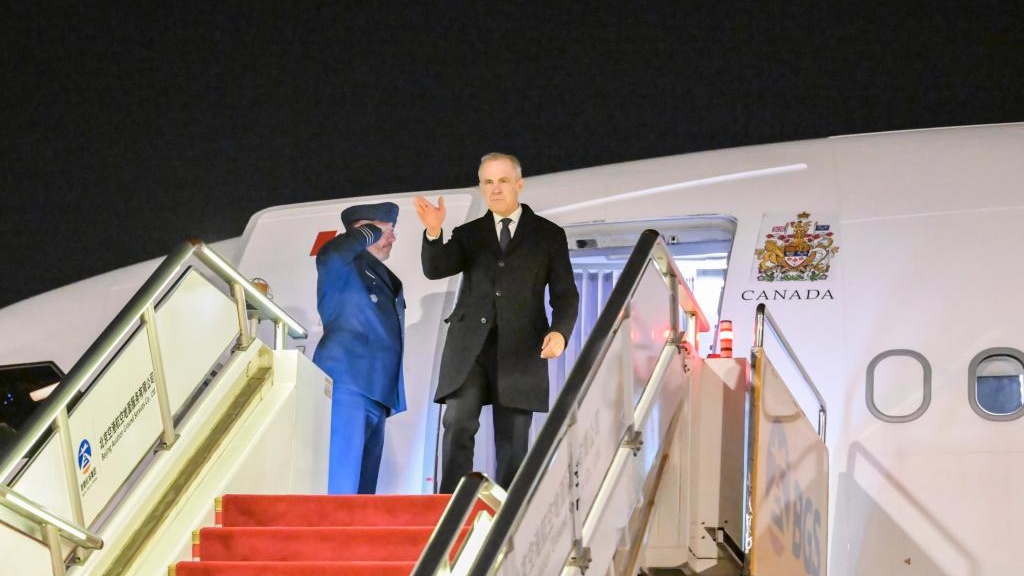
Canadian Prime Minister Mark Carney arrives in Beijing, capital of China, January 14, 2026. /Xinhua
China has also restored access for Canadian pork and cattle genetics from approved facilities and further pledged to fast-track the reopening of its market to Canadian pet food products, including processed and canned pet food, treats, and chews. These measures directly help farmers nationwide on both coasts by boosting demand, steadying prices, and creating more reliable sales opportunities.
“Through a pragmatic approach in our engagement with China, we are delivering tangible trade results for Canadians. These measures open a major market for our farmers and harvesters. This arrangement opens new opportunities for Canadian businesses and reflects a practical, forward‑looking approach that supports jobs at home and keeps Canada competitive globally,” said Maninder Sidhu, Minister of International Trade of Canada.
In addition, as Carney seeks to diversify Canadian energy exports away from the US, Chinese demand for LNG, cleaner fuels, and the minerals essential to battery and EV production becomes a lever. Canada’s energy exports to China have already risen sharply in recent years, with crude oil deliveries climbing 84% in just one year following the launch of the expanded Trans Mountain pipeline, according to Bloomberg. And China became the top buyer of Canadian crude.
Chinese capital and technology partnerships can help bring Canadian critical-mineral projects to scale. “Canada’s automotive industry is a pillar of our economic strength and the backbone of advanced manufacturing in our country … This agreement with China (reached during Carney’s China visit) will open new commercial and investment opportunities, and position Canada as a reliable partner in next-generation vehicle manufacturing,” said Mélanie Joly, Minister of Industry and Minister responsible for Canada Economic Development for Quebec Regions.
Deeper Canada-China ties diversify export markets so that a tariff in one country no longer cascades as brutally through Canadian factories and farms. They also attract additional pools of investment that can raise productivity and fund the energy transition, particularly if guided into infrastructure, manufacturing, and digital networks. Furthermore, improving ties with Beijing connects Canadian firms to Asian supply chains that will shape global growth over the next several decades, especially in EVs, batteries, and green technologies.
In a fragmenting world, middle powers like Canada will survive not by clinging to a superpower, but by building a web of economic relationships, and China is too big to ignore.
The author Jianxi Liu is a Beijing-based analyst of political and international relations. With 10 years of experience in media, she writes on topics pertaining to the US, the EU, and the Middle East.