

Despite their name, mountain bluebirds are commonly spotted in the Canadian Prairies.
Renowned for their vivid blue feathers, these birds are well-known among many residents of Alberta. However, ongoing conservation challenges they face have raised alarms among various groups.
As reported in The State of Canada’s Birds, a collaboration between Birds Canada and Environment and Climate Change Canada, the population of mountain bluebirds in Canada has decreased by 60 percent since 1970.
Currently, there are around 650,000 mountain bluebirds in Canada, which represents approximately 12 percent of their population in North America, marking the lowest recorded numbers to date.
Data collected from citizen science efforts and professional research indicates that the population of mountain bluebirds in the Canadian Prairies saw rapid growth from the early 1980s to the mid-1990s; however, a significant decline has been observed since then.
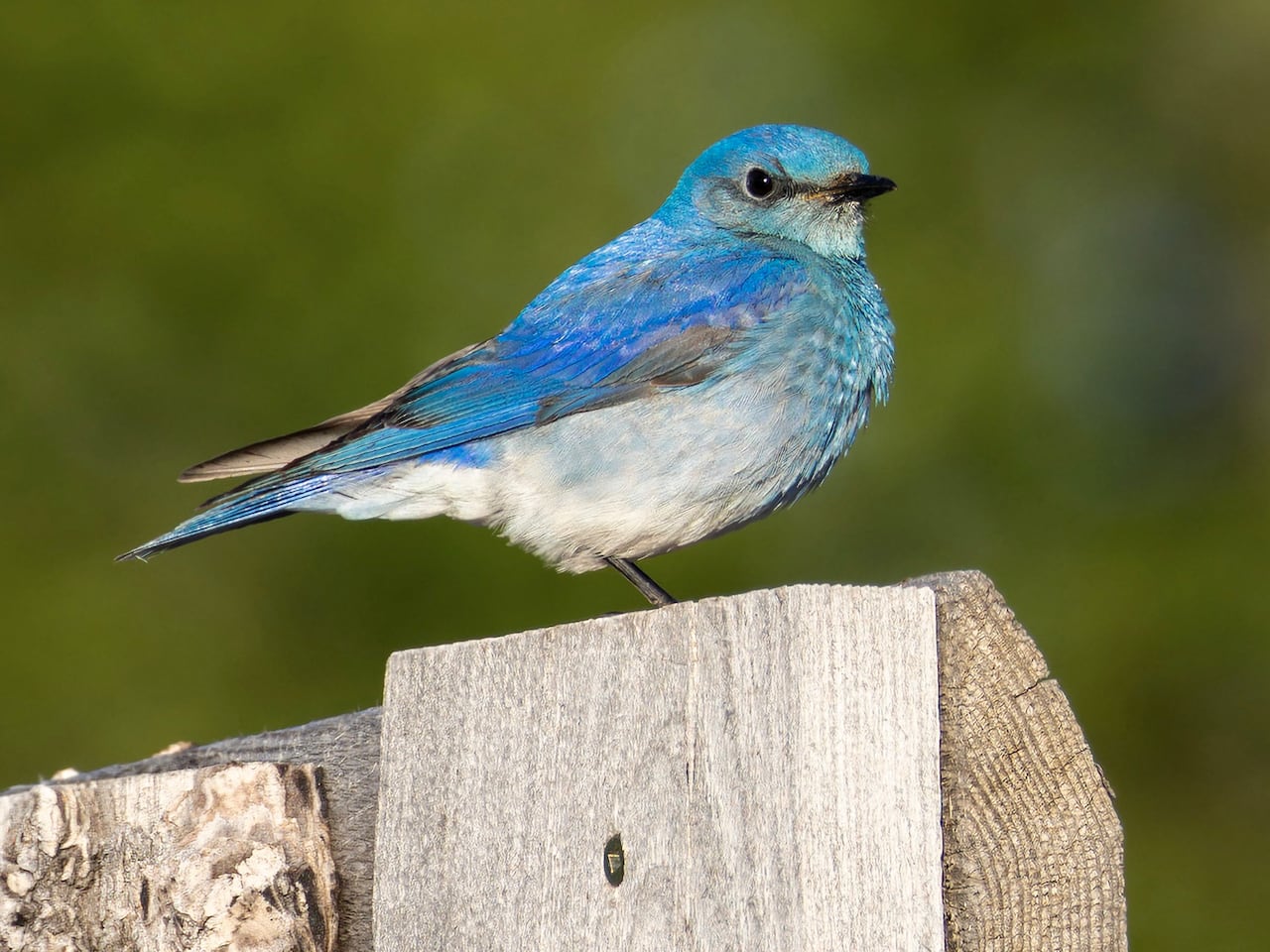
North America is home to three bluebird species, with the mountain bluebird being Alberta’s only native species. (Amir Said/CBC)
According to Jody Allair from Birds Canada, the precise causes behind the decline in mountain bluebird populations remain unclear, but potential factors include climate change, loss of habitat, and a decrease in insect numbers—the primary food source for these birds—linked to pesticide and herbicide application.
“The decline has been consistent, and especially since the early 2000s, it has been on a steady drop,” he noted.
This decline has motivated the Badlands Trail Society to initiate conservation efforts for mountain bluebirds in Alberta.
The organization has set up 48 bluebird nest boxes in the Drumheller Valley and its neighboring regions.
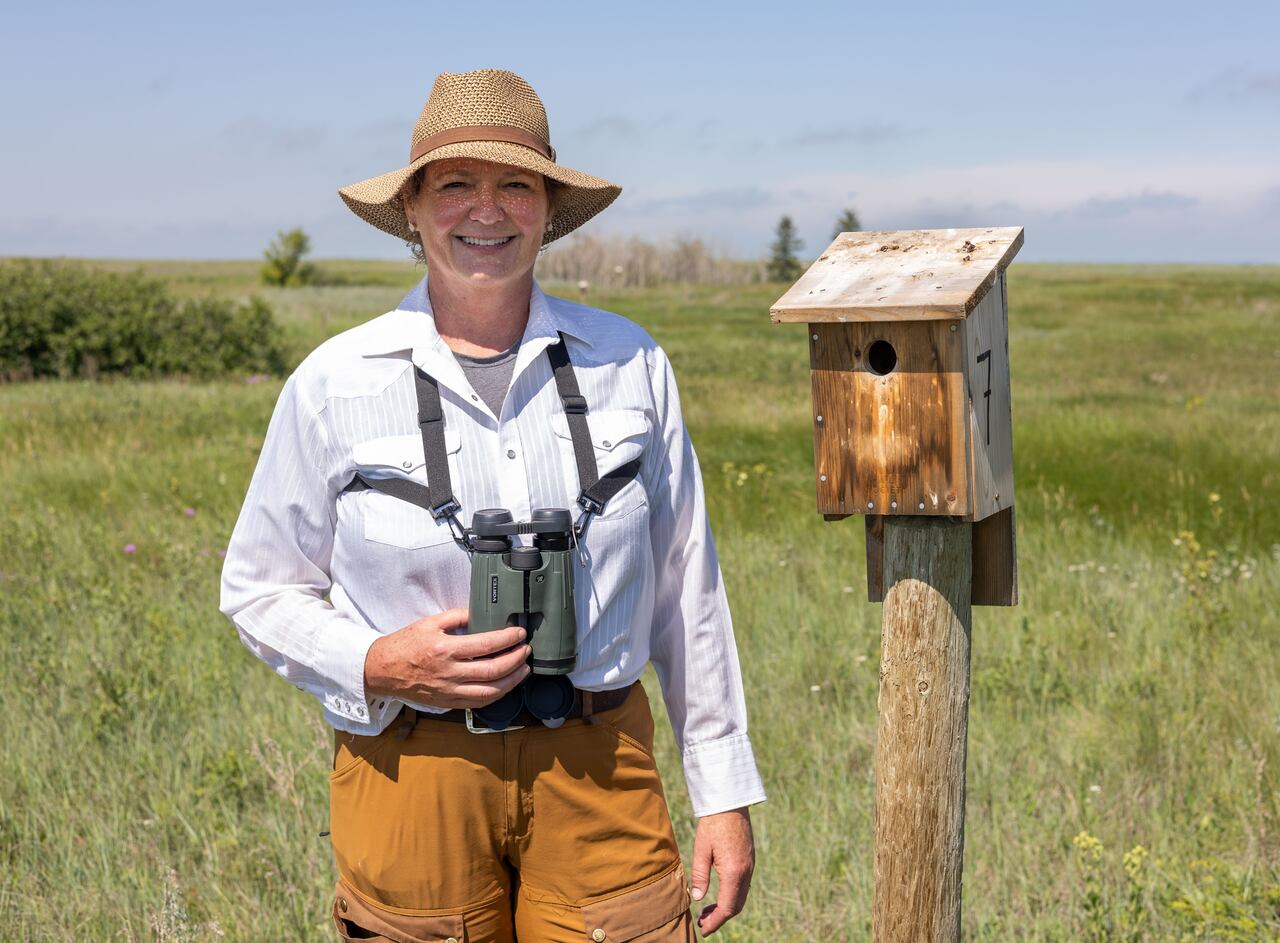
Cheryl Taylor, a founding member of the Badlands Trail Society, stands beside one of the mountain bluebird nest boxes. (Amir Said/CBC)
Cheryl Taylor, one of the founders of the organization, mentioned that the boxes are intended to provide the bluebirds with “a little bit of help.”
“Mountain bluebirds have been integral to the Drumheller Valley for as long as I can remember,” she remarked.
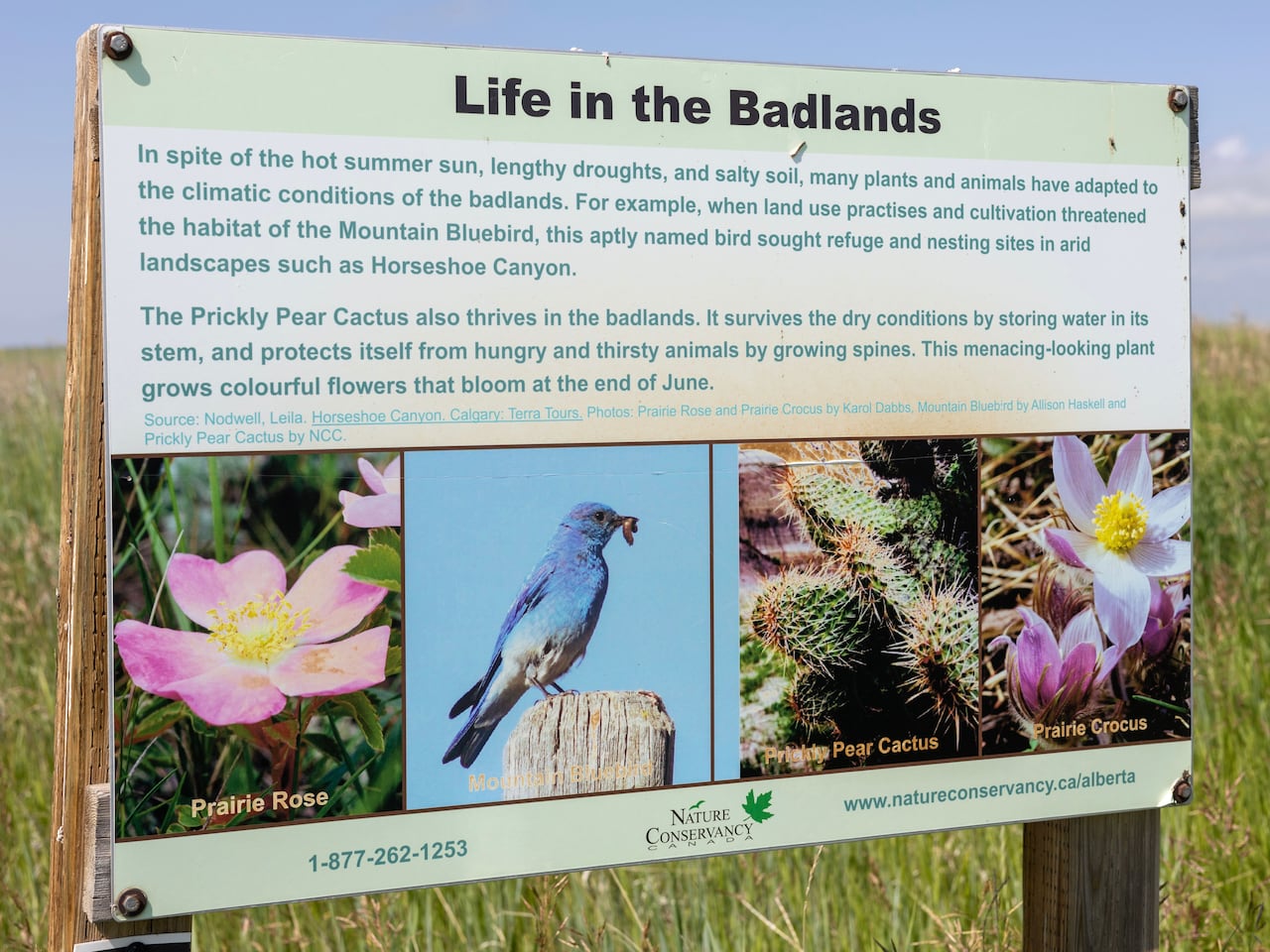
Although their name implies another habitat, mountain bluebirds are frequently found in Alberta’s prairies. (Amir Said/CBC)
The nest box initiative, created with assistance from fellow society member and long-time bluebird advocate Claude Rioux, is located on Nature Conservancy of Canada land to the west of Drumheller.
This land, with its ideal prairie conditions, plentiful food, and minimal human interference, serves as “an ideal site” for bluebirds.
Taylor explained that the group is aiding the species not only by providing safe nesting locations where natural cavities are scarce, but also by promoting awareness.
“When people become more acquainted with birds, they are more inclined to protect the habitats they need to thrive,” she stated.
“Birds also serve as indicator species, meaning if they are struggling, it signals trouble for us as well.”
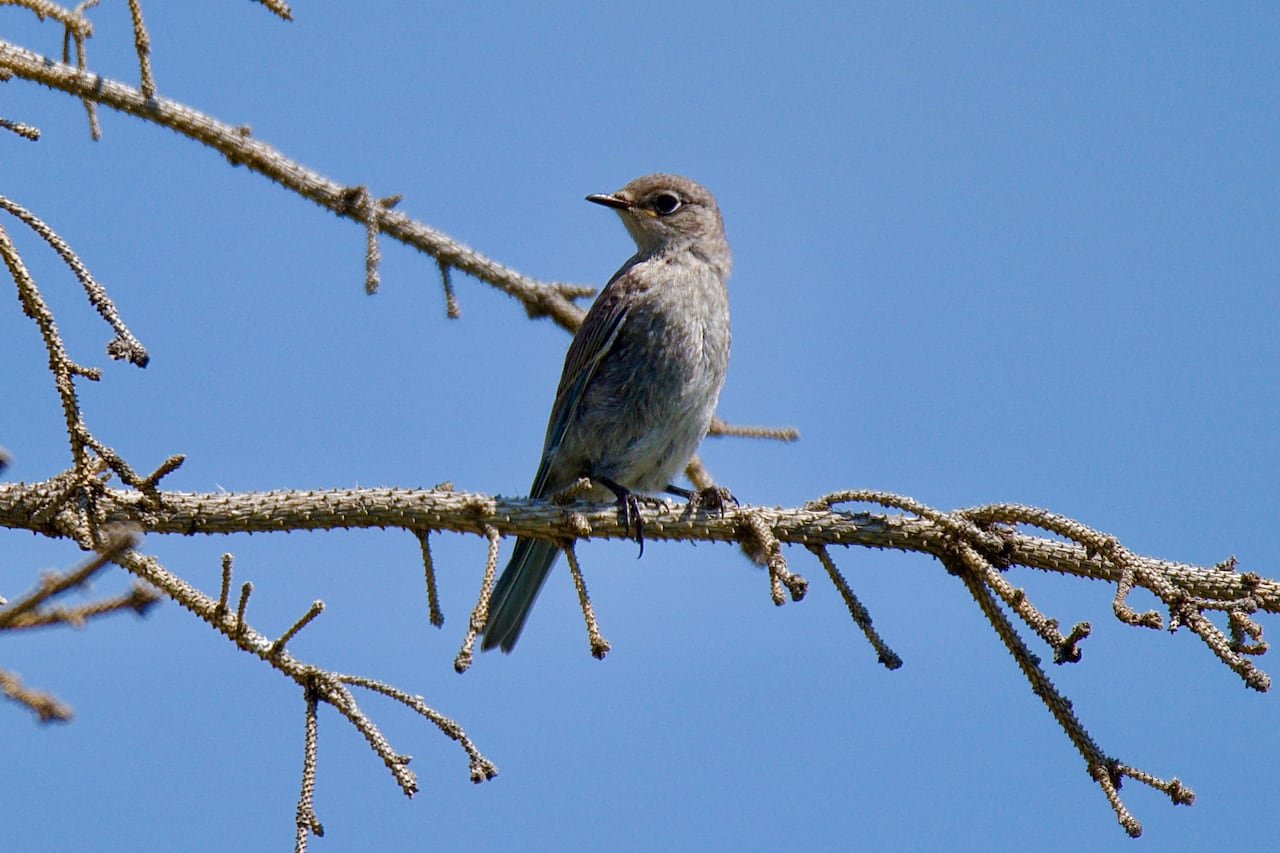
Only male mountain bluebirds display the striking blue coloration the species is recognized for, while females and immature males have more subdued hues. (Armaan Saha)
The Badlands project is among numerous bluebird nest box initiatives across the bird’s natural habitat in Western Canada.
Allair pointed out that the public’s strong interest in bluebird conservation is an encouraging indicator.
“Engaging people in conservation is invaluable,” Allair stated.
- ‘Conservation success story’: Endangered whooping crane makes rare appearance in central Alberta
- Endangered barn owl makes ‘extremely rare’ appearance in Calgary
“This is where real change can occur… getting people involved and fostering an understanding and appreciation for birds could transform their perception of the importance of conserving our natural ecosystems.”
Allair also noted that interest in bluebirds could lead to awareness of conservation challenges affecting other species that may face even more severe threats.
- Grassland birds in crisis on the Canadian Prairies, conservationists warn
- ‘This is our life support system’: Habitat loss in Manitoba’s grasslands a significant threat, experts warn
While the mountain bluebird is not experiencing a population decline as drastic as that of some other species, Allair believes it serves as an ideal example for educating the public about bird conservation in Canada.
“One of the advantages of mountain bluebirds is their appeal to the public,” he stated. “They are one of the most stunning birds we have in this country.”
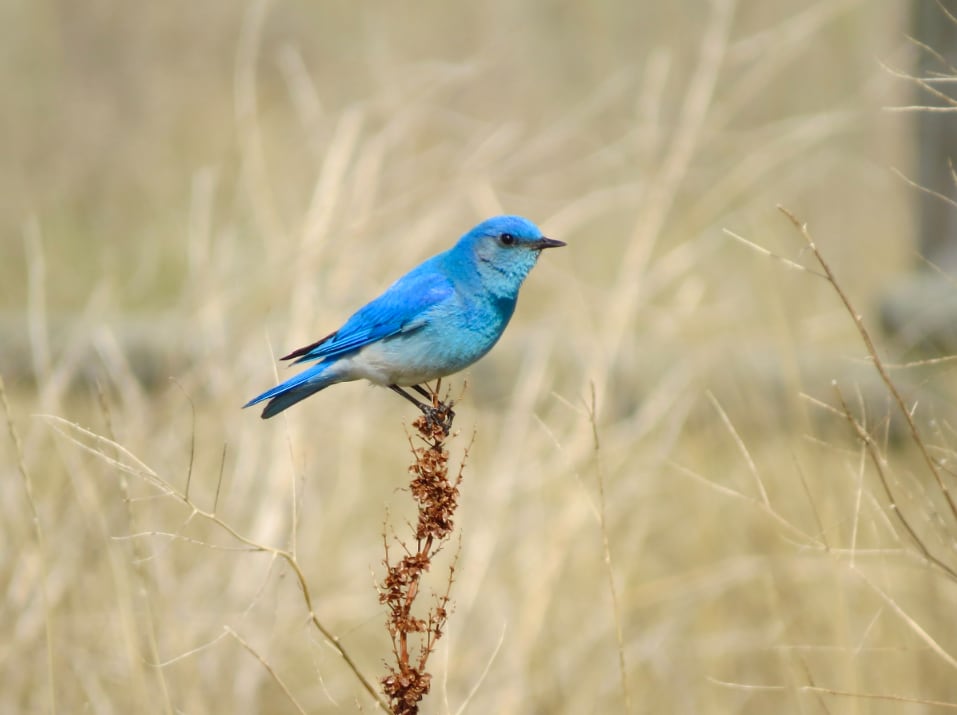
A mountain bluebird captured near Drumheller. (Jody Allair)
“If a mountain bluebird doesn’t spark your enthusiasm for birds, I don’t know what will,” Allair remarked. “It is truly one of the most magnificent-looking birds in the world.”
Allair encouraged Canadians to contribute to bird conservation in various ways, such as keeping cats indoors, taking measures to prevent bird collisions with windows, and safeguarding insect populations by refraining from using pesticides and herbicides.