

More than three years following her lymphedema diagnosis, Laura Johnston has faced numerous rejections from family practitioners and specialists, leading her to believe that treatment options were unavailable in Nova Scotia.
The 40-year-old experiences significant swelling in her right arm, necessitating her to wear a compression stocking at all times. She reported that her symptoms began in May 2021 after receiving treatment with an IV that, according to her, caused immediate discomfort and pain.
“I literally walked out of that hospital, and my life has changed drastically since then. It has been a continuous struggle, with each attempt feeling like a plea for someone to hear me,” Johnston expressed.
This situation arises over a year after Jennifer Brady and Crystal Ellingsen’s legal victory prompted an apology from Premier Tim Houston regarding the obstacles they encountered while seeking care for lymphedema and lipedema.
At that time, Houston stated, “No Nova Scotian should endure what they experienced,” and he requested that the auditor general conduct an ongoing review.
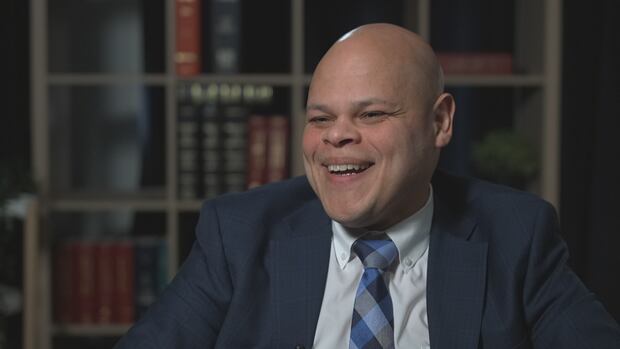
After a six-year fight for her life, a Nova Scotia woman was finally able to get out-of-province lymphedema surgery. For The National, CBC’s Angela MacIvor follows Jennifer Brady’s journey from living with chronic pain to finding new hope in a New Jersey hospital.
As an esthetician operating her own business in Mount Uniacke, N.S., Johnston finds it challenging to use her arm for extended periods. Since her diagnosis, she has been unable to obtain additional information on managing her condition.
A specialized MRI known as lymphoscintigraphy, a type of nuclear medicine imaging test, could provide the clarity she requires. However, she first needs an assessment from a specialist—a role she believed was nonexistent in the province.
This fall, a glimmer of hope emerged when MSI, the medical insurer for Nova Scotia, responded to her request for out-of-province treatment.
“The Department of Health and Wellness has confirmed that the Central Zone Plastic Surgery group at the QEII Health Sciences Centre is now accepting referrals for lymphedema patients,” stated an MSI letter to Johnston dated October 30.
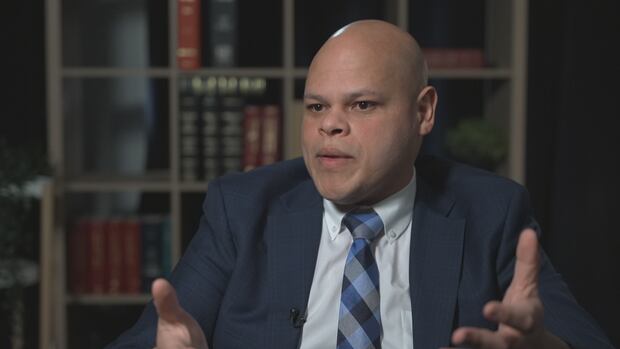
One of Johnston’s referrals was denied by a Halifax plastic surgeon’s office, stating that it does not treat lymphedema. (David Laughlin/CBC)
She mentioned that she followed the necessary procedures and had a primary-care provider submit a referral through the Central Referral Platform—three times—but was still met with refusals.
One letter from a plastic surgeon’s office dated November 5 was returned to Johnston with a handwritten note indicating “we do not treat lymphedema. Please redirect.”
An October 31 denial stated that lymphedema was not within the doctor’s scope of treatment, while another on October 30 included inquiries directed at the patient.
“To my knowledge, there is no plastic surgeon in QEII Central Zone accepting referrals for lymphedema. May I inquire where this information originated?” the administrative assistant wrote in an email.
The internal confusion has only intensified Johnston’s frustration and sense of urgency.
“Every email I’ve sent has clearly asked for the name of the person I need to contact. No one can provide the name of a doctor,” Johnston lamented.
Nova Scotia Health and the Minister of Health and Wellness have verified that care for lymphedema patients is available. However, officials have not disclosed which doctors are providing treatment to CBC News.
The health authority issued a statement on Monday explaining that doctors only undertake immediate lymphatic reconstruction surgeries in specific cancer cases to avert the development of lymphedema.
“Although referrals are being made to plastic surgeons for certain types of lymphedema treatment, not all procedures are available here,” wrote Jennifer Lewandowski, spokesperson for Nova Scotia Health.
“Some treatments can be accessed within the province, but more complex surgical procedures are not currently offered, which implies that specialists may not accept every referral based on their expertise or capacity.”
The health authority did not make anyone available for an interview.
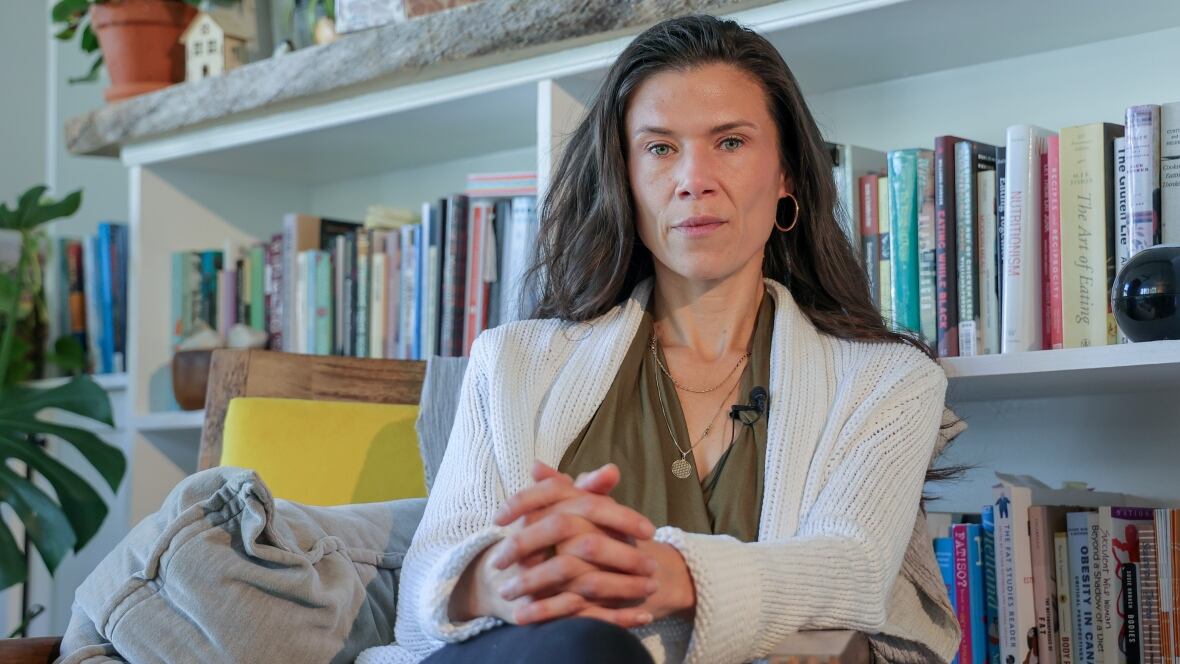
Jennifer Brady of Halifax spent several years fighting the provincial Department of Health for access to care outside of Nova Scotia for lymphedema in both of her legs. (Robert Short/CBC)
The emergence of a Nova Scotia-based specialist providing lymphedema treatment marks a subtle shift in the level of care available in the province since Brady and Ellingsen’s court victory in October 2024. A judge ruled that the province’s decisions to deny their care, including the stipulation of a Nova Scotia specialist that was unavailable at the time, were “unreasonable.”
Johnston expressed her belief that the case, along with Brady’s increased public awareness regarding lymphedema care, would “break down barriers,” but this has yet to materialize.
“It has been a back-and-forth journey. Each time they respond, it feels like the same message is reiterated in different wording, essentially stating ‘you need a specialist.’”
Michelle Thompson, the Minister of Health and Wellness, asserts that not “all care looks exactly the same for all patients.”
“What has changed in the past year is a more collaborative approach with patients,” Thompson stated.
“We recognize that due to the lack of expertise in Nova Scotia, we need to develop that.”

Michelle Thompson is Nova Scotia’s minister of Health and Wellness. (Robert Short/CBC)
Minister Thompson mentioned that her department is collaborating with Doctors Nova Scotia and the Lymphedema Association of Nova Scotia to “identify the clinical pathways that are most suitable for individuals.”
Sarah Brownlow During, a board member of the Lymphedema Association of Nova Scotia and Johnston’s massage therapist, noted that meetings have been ongoing for the past year without significant advancements.
“The intent is there, and it is evident that the government aims to assist in finding solutions or opportunities for individuals with lymphedema in this province,” remarked Brownlow During.
“However, there is still a considerable amount of work to be done in terms of education, awareness, and recognizing the substantial need that exists, suggesting we are not as close to a resolution as many would prefer.”

Sarah Brownlow During treats Laura Johnston every three weeks with a manual lymphatic drainage massage. Brownlow During is also on the board for the Lymphedema Association of Nova Scotia. (Jeorge Sadi/CBC)
She expressed surprise that Johnston received a letter indicating that plastic surgeons are now accepting lymphedema patients since she has been assisting Johnston with navigating medical care while simultaneously advocating with the department.
Brownlow During describes it as a “significant disconnect.”
“It appears that while they wish to help and seek solutions, there is a clear lack of communication between different departments,” she noted.
Although Brownlow During provides manual lymphatic drainage—a specialized massage technique to Johnston every three weeks—she acknowledges that it only offers temporary relief.
“I believe diagnostics would greatly assist in her situation,” she stated. “There are methods to ascertain how much of the issue stems from the lymphatic system itself.”
She added that the doctor who diagnosed Johnston with lymphedema is not a specialist, which is necessary to obtain out-of-province care.
“A specialist is required to confirm that it is lymphedema, and that has contributed to her challenges. We have observed similar issues in other cases,” said Brownlow During.
Johnston is perplexed as to why officials will not clearly delineate what care options are available.
In the latest correspondence from the Department of Health and Wellness, Johnston was informed that her case is under review and was asked to be patient.
“You cannot help but feel as though no one is listening or caring, and the responsibility is continually shifted back onto me,” she shared.
“I have conducted the research, identified potential treatment centers, yet I remain at a standstill.”
MORE TOP STORIES
-
N.S. child welfare system ‘incredibly broken,’ say experts after guilty plea in toddler death
-
N.S. to release environmental racism panel final report after community consultation
-
Nova Scotia’s population dips for the first time since 2020
-
RCMP not aware of fentanyl in illegal cannabis in Nova Scotia, despite premier’s claims
-
N.S. dispensary raided following government directive to crackdown on cannabis