


During the freeski slopestyle event at the Winter Olympics, Canadian Megan Oldham clinched an Olympic bronze medal on her final run, accompanied closely by a drone capturing the action, providing a fresh perspective to viewers courtesy of the Olympic Broadcasting Services.
From the luge track to the alpine downhill slopes, spectators have been intrigued by this innovative addition to the coverage.
Pierre Ducrey, the International Olympic Committee sports director, emphasized the commitment to enhancing the viewing experience both in the stadium and beyond.
The drones utilized are advanced first-person view (FPV) drones, offering dynamic tracking of athletes with high speeds and precise movements matching their actions on the slopes, jumps, or ice surfaces.
While drones have been part of the Olympics since 2014 in Sochi, Russia, the introduction of FPV drones marks a new technological advancement in Olympic broadcasting.

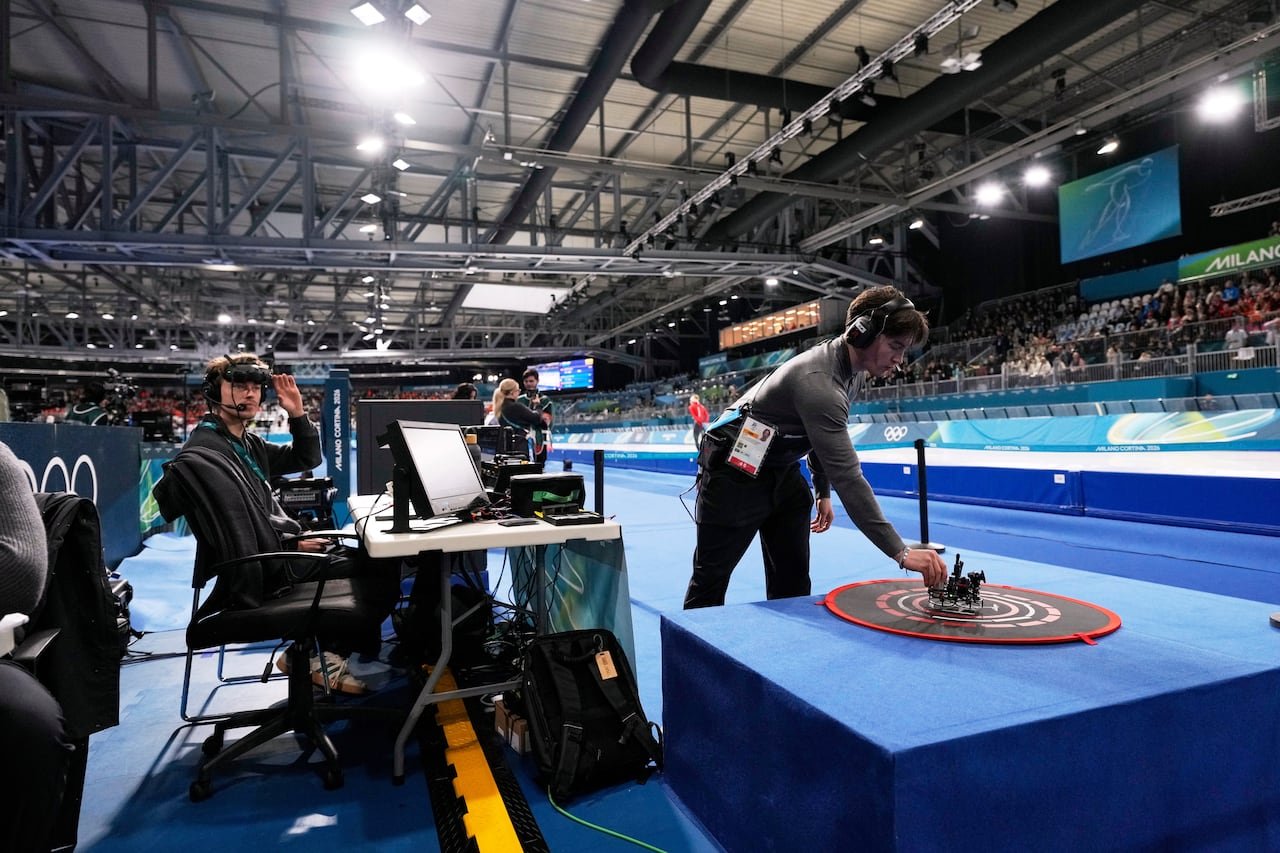
The skilled drone pilots, equipped with headsets and controllers, have been a highlight of the Winter Olympics, showcasing their abilities to keep up with alpine skiers at speeds reaching up to 75 km/h and navigate challenging terrains like the luge track.
Behind the scenes, the drone coverage teams have been working tirelessly to provide this unique perspective to viewers, requiring extensive planning and execution.
Trevor Lyons, CBC’s chief drone pilot, emphasized how this technology brings audiences closer to the athletes, offering an intimate and immersive experience of the athletes’ speed and challenges.
While specifics of the drone coverage process have not been disclosed by the International Olympic Committee, drone experts confirm that meticulous efforts, including simulations and on-site operations, have been crucial in delivering this cutting-edge coverage.

A New Perspective
Despite the innovative use of drones in Olympic coverage, one criticism has been the noise generated by the drones, which was particularly noticeable during the women’s downhill finals.
Even spectators at the events have remarked on the drone buzz, drawing comparisons to the vuvuzelas at the 2010 soccer World Cup in South Africa.
Some athletes have also expressed mixed