

The leader of the Quebec maple syrup producers’ association has announced that the province’s strategic syrup reserve has been completely depleted due to soaring demand for the product.
Luc Goulet, president of Québec Maple Syrup Producers, indicates that assistance from the government is essential to ensure the industry capitalizes on growth opportunities.
The quantity of maple syrup produced is influenced by weather patterns. Consequently, the producers’ association created a strategic reserve to maintain stable prices and supplies.
Last year, commercial buyers in the U.S. increased their inventories, concerned that former President Donald Trump would follow through on his threats to impose tariffs.
According to Goulet, the reserve has been exhausted as sales keep rising.
“Our strategic reserve has been reduced to zero,” Goulet stated during an interview while discussing a report detailing the industry’s economic advantages.
This situation could result in the loss of customers if weather conditions do not favor the flow of maple sap, he warned.
Goulet referenced stock shortages from 2007 and 2008 as a cautionary tale.
“We lost certain markets because the product was unavailable,” he remarked. “Consumers quickly turn to other sweet alternatives, and once that shift occurs, those new consumption patterns are often hard to break.”
According to the president of the Maple Industry Council, which represents licensed buyers, Quebec maple syrup is increasing its presence in international markets.
Louis Turenne observed a 9.34 percent rise in exports in 2024 compared to the previous year, with growth accelerating to 15.8 percent in 2025 as the threat of new tariffs loomed.
From January to August 2026, the export growth rate slowed to 2.48 percent compared to the same timeframe in the prior year.
“It’s always challenging to surpass an outstanding year,” Turenne noted.
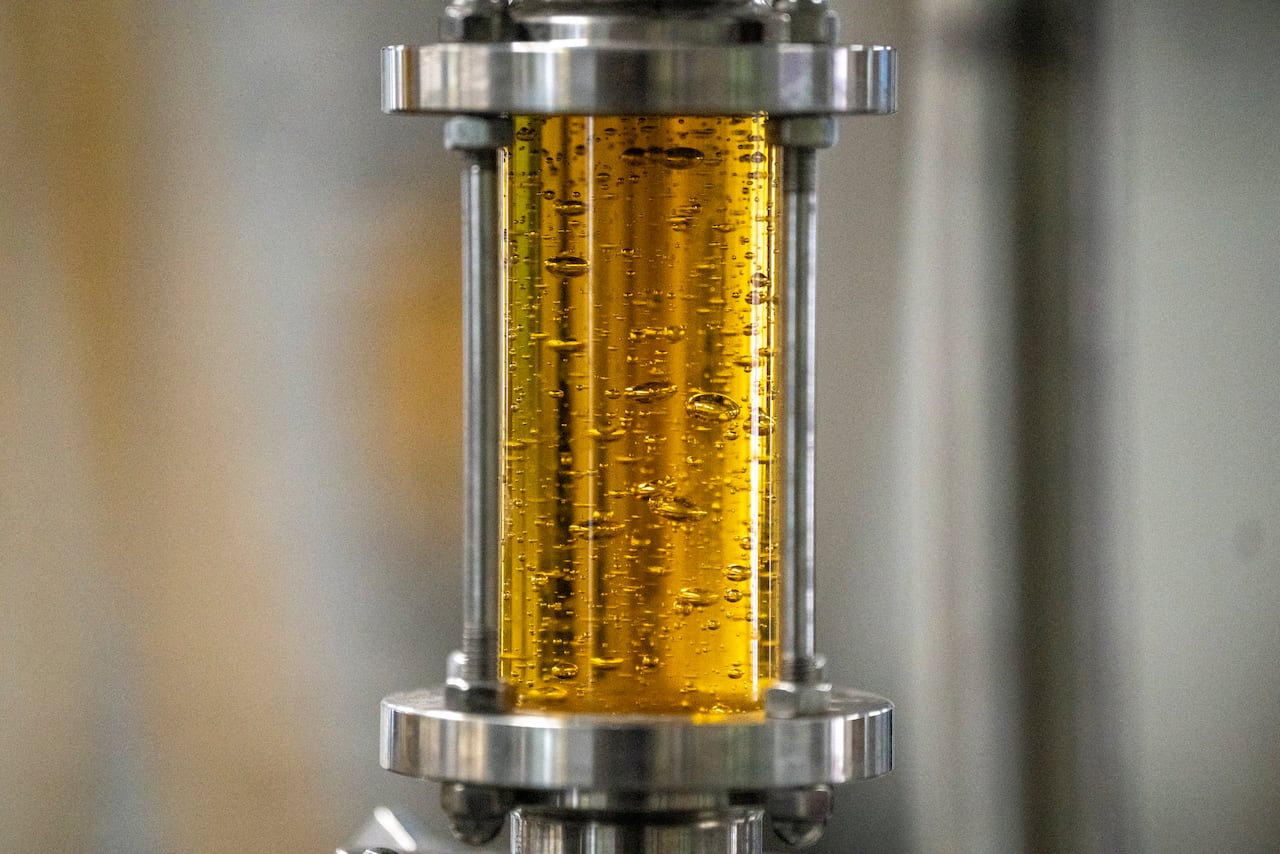
Currently, nearly 65 percent of maple syrup exports are destined for the United States. (Christinne Muschi/The Canadian Press)
Goulet admits that meeting the high demand from enthusiastic consumers is a welcome challenge.
Nevertheless, he is confident that the industry still has room for expansion. “There remains a vast amount of untapped potential in Quebec’s maple forests,” he stated.
Goulet expressed concern that investments from Quebec City are “insufficient for our needs,” and he hopes to engage the newly elected Parti Québécois government.
“When we are informed that our industry is flourishing, that we are growing, and that we do not require support — I no longer accept that perspective at the governmental level,” he asserted.
Turenne suggests that Quebec could boost production by offering financial assistance to producers and aiding processors in locating new international markets.
At present, approximately 65 percent of maple syrup exports are sent to the United States.
“We have made substantial strides in diversifying our markets in recent years. Two decades ago, that percentage was 80 percent,” Turenne remarked.
“However, we need to expedite the opening and development of markets in Europe, Australia, and Asia to lessen our reliance on the U.S. market,” he added.
Industry concentrated in Quebec
While the Canadian flag features a maple leaf, the syrup industry is predominantly located in Quebec.
According to the industry association’s report released Thursday, over 70 percent of North American production occurs in the province.
When accounting for production, processing, and specialized equipment manufacturers, the maple syrup sector contributed $1.21 billion to the gross domestic product in 2025, the report stated.
The industry employs more than 10,000 full-time equivalent workers and generated $285 million in tax revenues, excluding municipal taxes and public land lease fees.
This amount does not take into account the sugar shacks that many Quebec residents visit each spring.
“Sugar shack operations are more similar to the restaurant industry,” Turenne noted.
The maple syrup producers’ group utilized the recent election campaign to emphasize the significance of the industry as a major employer and economic contributor, and Goulet mentioned that candidates were often taken aback by its substantial role.
In several municipalities, “if maple syrup production were to cease, it would be akin to shutting down the villages,” Goulet concluded.