

The U.S. stock market and oil prices remained stable on Tuesday, with investors eagerly anticipating any signals indicating the potential end of the conflict with Iran.
The S&P 500 saw a modest increase of 0.3%, following recent volatile swings driven by dramatic fluctuations in the oil market. By 12:30 p.m. ET, the Dow Jones Industrial Average had climbed by 210 points, or 0.4%, while the Nasdaq composite was up by 0.6%.
Oil prices held steady, mirroring their levels from late Monday. The sharp spikes in oil prices have rattled global financial markets, fueled by concerns that the ongoing conflict could disrupt the global oil and natural gas supply chains for an extended period.
The price of a barrel of Brent crude, the global benchmark, was at $89.42 US, marking a 9.6% decrease from the previous day’s settlement price. However, much of this decline occurred before the close of Wall Street trading on Monday, resulting in minimal impact on U.S. stocks on Tuesday.
Similarly, the price of benchmark U.S. crude remained relatively unchanged at $84.64 US, compared to late Monday levels.
Oil prices experienced a sharp drop on Monday afternoon, plummeting from nearly $120 US per barrel—the highest level since 2022—after U.S. President Donald Trump suggested in an interview with CBS News that the conflict was nearing its conclusion.
Trump’s remarks initially raised hopes for a swift resolution to the conflict, potentially easing the flow of oil from the Middle East to global markets. However, subsequent statements by Trump and a spokesperson for Iran’s paramilitary Revolutionary Guard introduced uncertainty regarding the conflict’s timeline.
Iran continued its attacks on Tuesday targeting Israel and Gulf Arab countries, sustaining pressure in the Middle East amid a conflict initiated by Israel and the U.S. a week and a half ago, leading to a surge in oil prices.
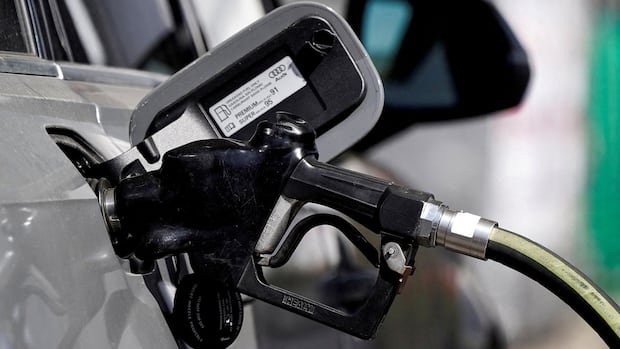
The ongoing uncertainty for the global oil supply because of the U.S.-Israel war with Iran caused a volatile day for markets on Monday, with oil prices skyrocketing in the morning only to tumble back down later in the day.
The future trajectory of oil prices remains uncertain, with concerns looming over the duration and extent of the price surge.
“The outlook for oil right now is about as binary as it gets,” remarked Hakan Kaya, a senior portfolio manager at Neuberger Berman.
“Either the Strait of Hormuz reopens, triggering a significant decline in the risk premium, or it remains closed, resulting in potentially the largest supply disruption in recent history. There is no middle ground, making it challenging to predict the outcome accurately.”