
A judge in Washington has mandated that the Kennedy Center for the Performing Arts compensate jazz artist Chuck Redd with over $250,000 in legal expenses.
This decision follows closely on the heels of the same judge, Tanya Jones Bosier of the District of Columbia Superior Court, dismissing the center’s lawsuit that accused Redd of breaching his contract.
In 2025, Redd, a drummer and vibraphonist known legally as Charles, withdrew from his long-standing position as the host of the center’s annual free Christmas Eve concert. This action was taken in response to the center’s contentious choice to inscribe Donald Trump’s name on the white marble exterior of the building.
“No individual should be compelled to invest time and resources defending themselves against unfounded and politically charged lawsuits initiated by the Trump Administration,” stated Redd’s attorney, Lisa J. Banks, in a message to CBC News.
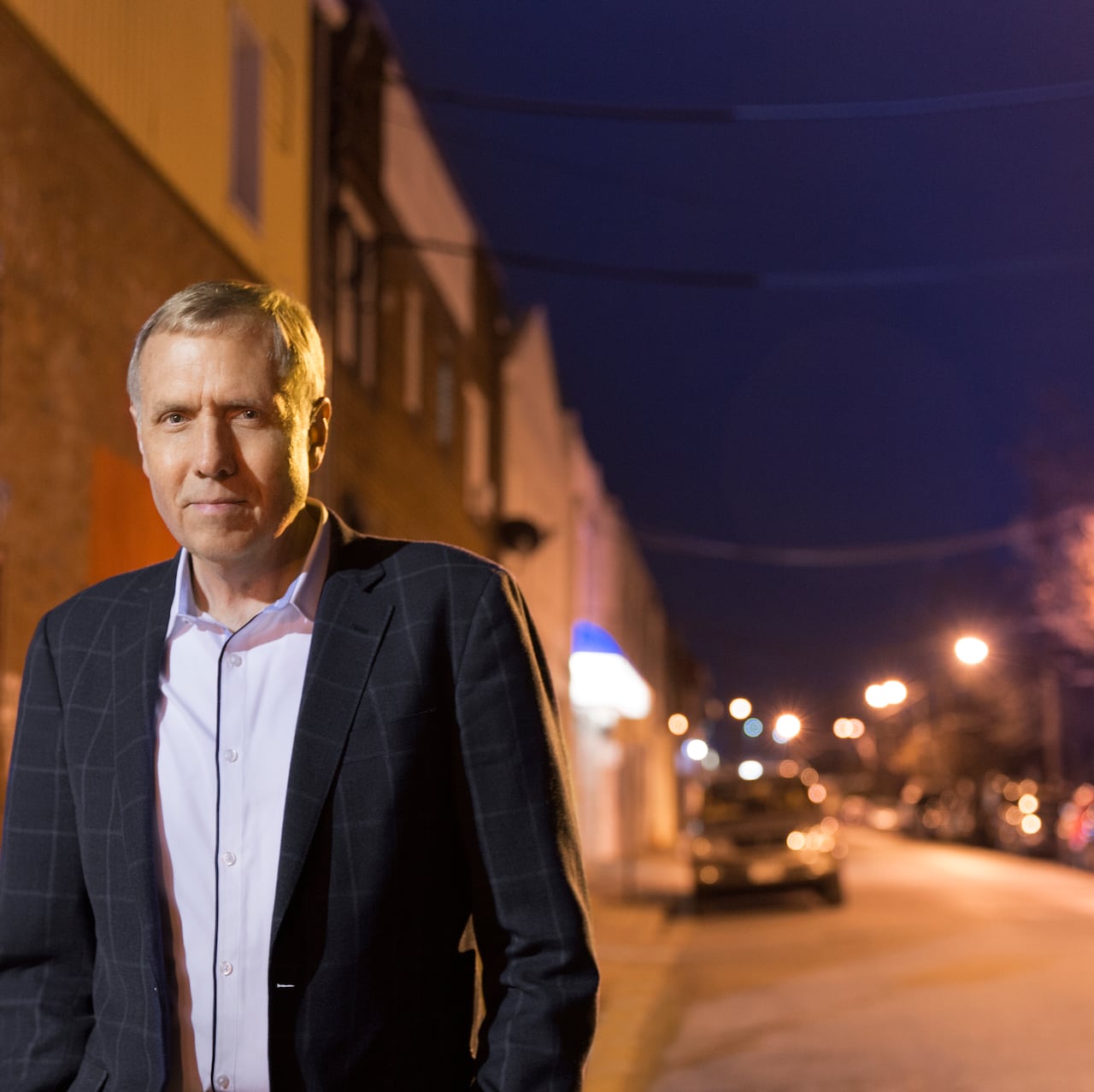
Charles Redd cancelled his performance last year in protest of U.S. President Donald Trump’s name being added to the Kennedy Center building. (Robert Severi)
For many years, Redd has been a host and performer at the center’s free Christmas Eve concerts. However, he opted out of the scheduled performance shortly before the event after Trump’s name was affixed to the building’s facade.
Following his withdrawal, the center threatened to take legal action against Redd, asserting that “Your choice to withdraw at the last minute — explicitly in response to the Center’s recent renaming, which honors President Trump’s extraordinary efforts to save this national treasure — is a classic example of intolerance and very costly to a non-profit Arts institution,” and indicated they would pursue $1 million in damages, describing it as a “legal stunt.”
The center proceeded with the lawsuit, which was later dismissed by the Washington judge on the grounds that the center failed to present a legitimate claim of breach of contract, according to legal documents examined by CBC News.
What transpired
A U.S. federal judge declared in May that Trump’s name had been wrongfully added to the Kennedy Center.
This ruling arises from a continuing dispute that began when Trump assumed control of the center, dismissing long-serving Kennedy Center chair David Rubinstein in February.
“I have made the decision to promptly remove several individuals from the Board of Trustees, including the Chairman, who do not align with our Vision for a Golden Age in Arts and Culture,” Trump remarked in a social media update at that time.
Since the name change, numerous individuals in the arts and cultural sector have distanced themselves from the center or cancelled their scheduled appearances, including Canadian author Louise Penny, Shonda Rhimes, and Issa Rae.
The letters displaying Trump’s name on the Kennedy Center’s facade have since been removed, the center confirmed in June. However, at that time, a tarp was still draped over the scaffolding erected for workers, obscuring the view of any remaining words, which may have only included “The John F. Kennedy Center for the Performing Arts.”
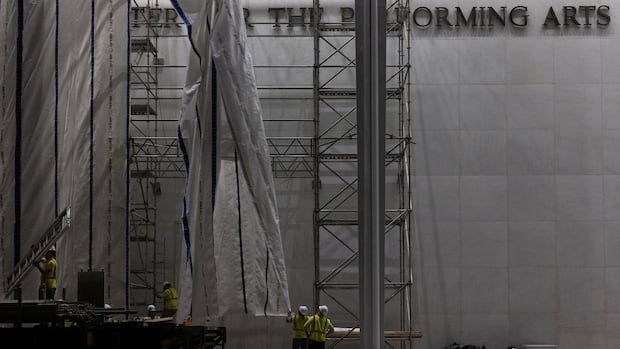
Crews worked overnight Friday and into Saturday to remove U.S. President Donald Trump’s name from the façade of the Kennedy Center for the Performing Arts in Washington, D.C., after a federal court ruled that only Congress could rename the venue memorializing former U.S. president John F. Kennedy. The wall was largely obscured by large tarps draped over scaffolding, but workers were seen removing letters through a gap in the covering.
Center plans to appeal
A representative for The Kennedy Center informed CBC News via email that they plan to contest the ruling. In the meantime, Redd’s attorneys deemed the judge’s ruling as “suitable.”
“The Trump-controlled Kennedy Center attempted to suppress dissent regarding its unlawful name change by initiating a groundless lawsuit against jazz musician Chuck Redd.”
The Washington venue hosts over 2,000 events each year and serves as the official home of the National Symphony Orchestra and the Washington National Opera.