

Instances of cancerous tumors transferring from one organism to another are uncommon. However, a genetic analysis indicates that such a phenomenon is occurring with melanoma tumors in catfish across Quebec and the northeastern United States.
This finding marks the first instance of a transmissible cancer identified in fish, and it is among the very few transmissible cancers documented to date, as detailed in a study published in the journal Nature on Wednesday.
Julie Dragon, a co-author of the study, highlighted that only three other types of transmissible cancers have been recognized thus far — in Tasmanian devils, dogs, and shellfish.
“Such occurrences are exceptionally rare in nature,” she stated. “Thus, something extraordinary must be taking place to enable this transmission.”
Tumors emerged following a significant flood
In 2012, anglers at Lake Memphremagog, which borders Quebec and Vermont, first reported catching brown bullhead catfish exhibiting unusual black spots and lumps.
These turned out to be melanoma skin cancer tumors, a type of cancer that can also affect humans.
Currently, approximately one-third of the brown bullheads in the lake are affected.
The extent of the illness in these fish remains uncertain. In certain instances, the cancer has spread to other organs, including the brain and liver. However, many fish with lesions appear to be relatively healthy, and some older specimens even bear the tumors, indicating they might coexist with the illness for a while.
Due to the sudden emergence of the black lesions in Lake Memphremagog following a major flood triggered by post-tropical storm Irene, local residents feared that carcinogens washed into the lake by the floodwaters were to blame.
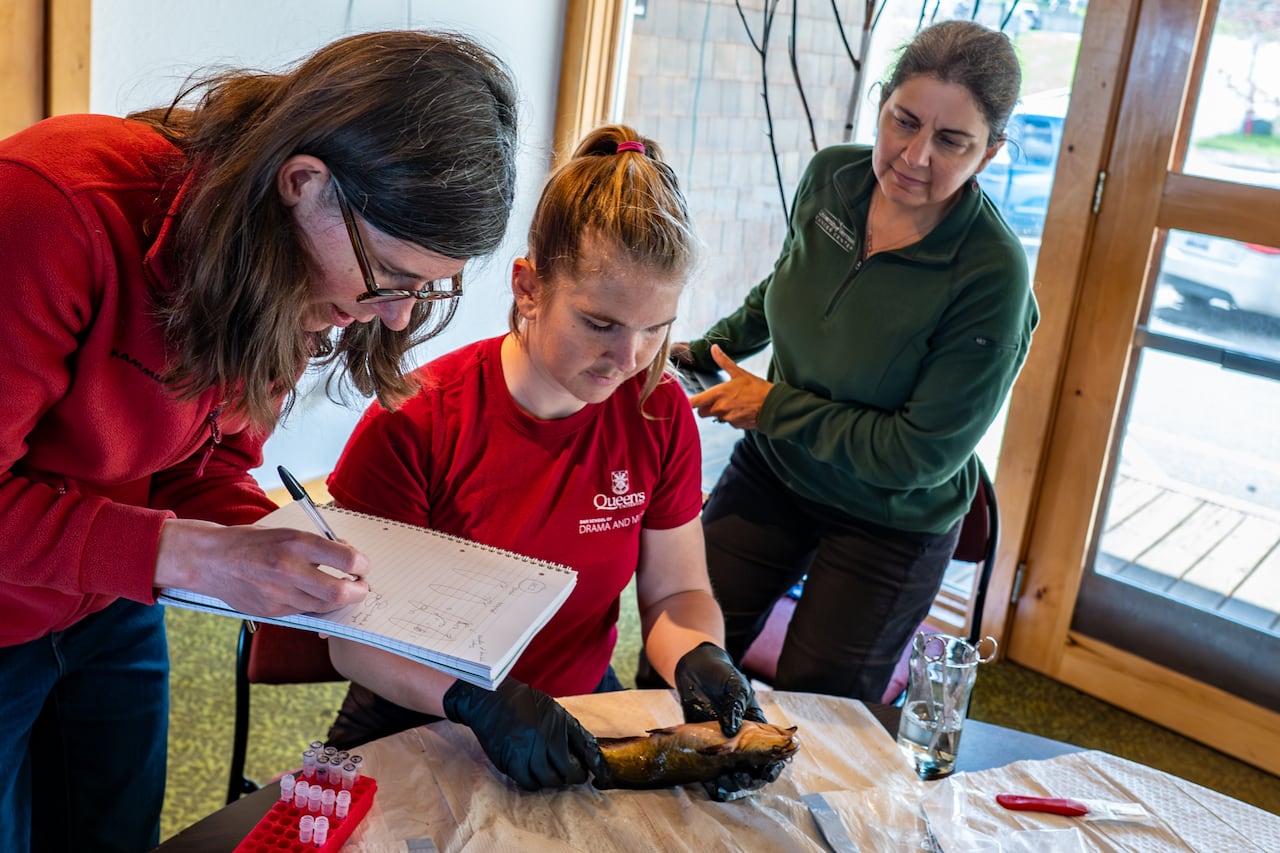
Cancer researcher Julie Dragon (right) co-leads the dissection and tissue sampling of catfish with melanoma skin cancer at the Gateway Center by Lake Memphremagog in Newport, Vermont. (Josh Brown)
Tests for carcinogens have not provided definitive results, although a study published in May indicated elevated levels of seven metals, including zinc and the carcinogen arsenic, in the skin of affected fish.
In response, in 2014, Dragon, who is an associate professor of microbiology and molecular genetics at the University of Vermont’s Larner College of Medicine, was asked by Vermont’s Fish & Wildlife Department to investigate the possibility of a viral cause.
Findings from genetic tests
Genetic analyses did not detect any viruses.
Dragon then explored another hypothesis — that the catfish in the lake were inbred and possessed a mutation rendering them more vulnerable to cancer. She conducted genetic tests on both healthy and affected fish, as well as the tumors themselves.
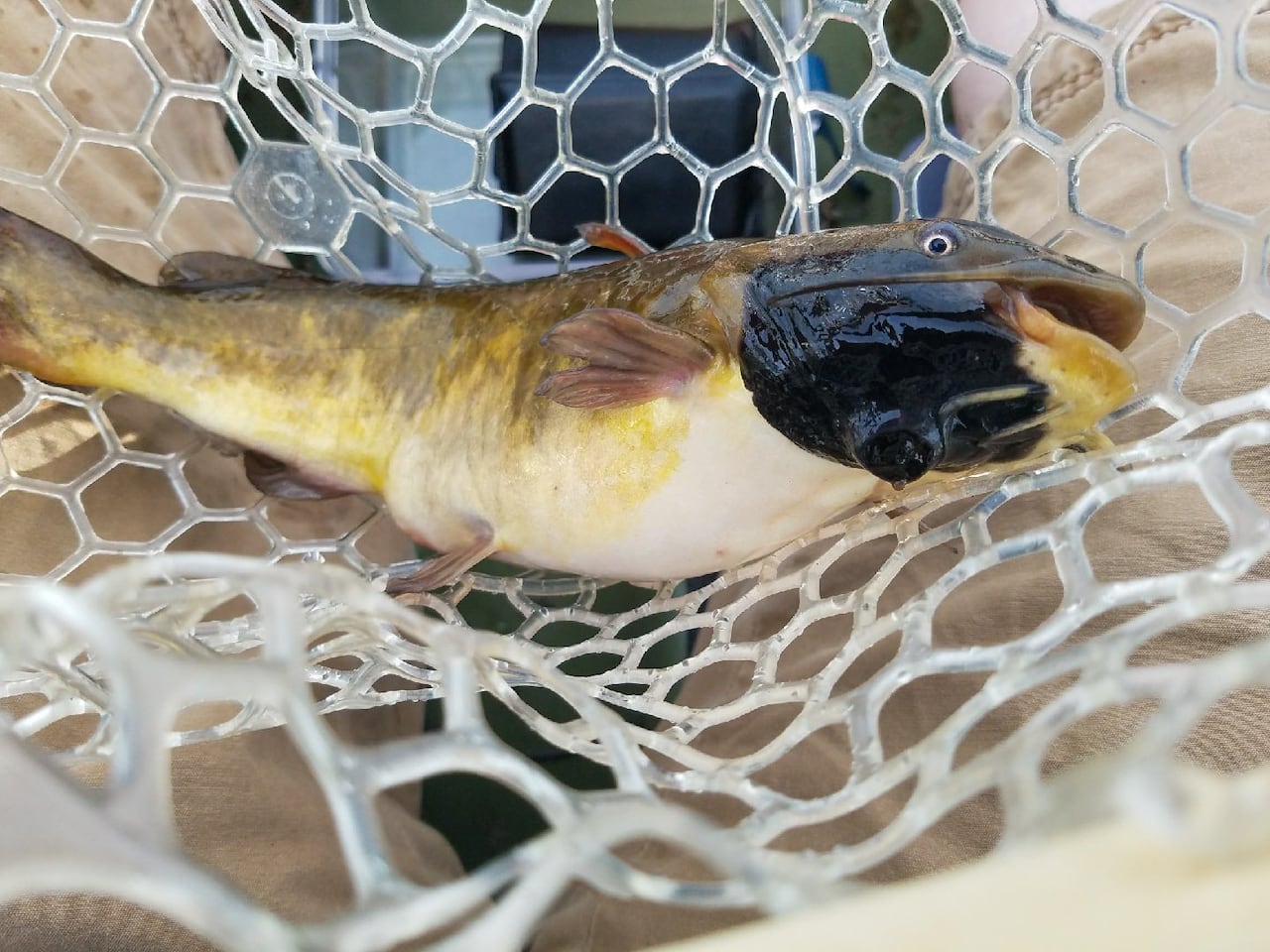
The black coloration and lump on this brown bullhead catfish indicate a melanoma skin cancer tumor. (Vermont Fish & Wildlife)
The results revealed that the fish were not inbred; rather, they exhibited significant genetic diversity.
The most surprising finding? While typical cancer cells mutate from the host’s cells and bear resemblance to their host, “these cancer cells were more alike to each other than to the fish [they originated from],” Dragon remarked.
Dragon and her colleagues found themselves puzzled. They began consulting with other scientists for their perspectives. Sam Hart, a researcher from the University of Washington and co-author of the current study, had previously conducted research on transmissible cancer in shellfish. He proposed that a similar mechanism might be affecting the catfish.
Could it be sexually transmitted?
Dragon stated that the tumors appear to shed cells easily: “They tend to disintegrate upon contact.”
Since the disease only impacts adult fish, one theory posits that transmission occurs during spawning, when they gather in large groups and may come into contact with each other’s spines, located behind their pectoral fins.
“They … swim closely together, and we believe it is possible that they jab one another, allowing cells to transfer between fish,” Dragon explained.
To date, the researchers have not yet demonstrated the transmission of tumors from one fish to another, even in laboratory settings, though they aim to achieve that later this year.
Due to this uncertainty, Vicki Blazer, the lead author of the May study that identified increased toxin levels in the afflicted fish, remains skeptical about labeling this as a transmissible cancer.
“My initial concern is to label something as transmissible when you haven’t actually demonstrated its transmission,” stated Blazer, a retired scientist from the U.S. Geological Survey.
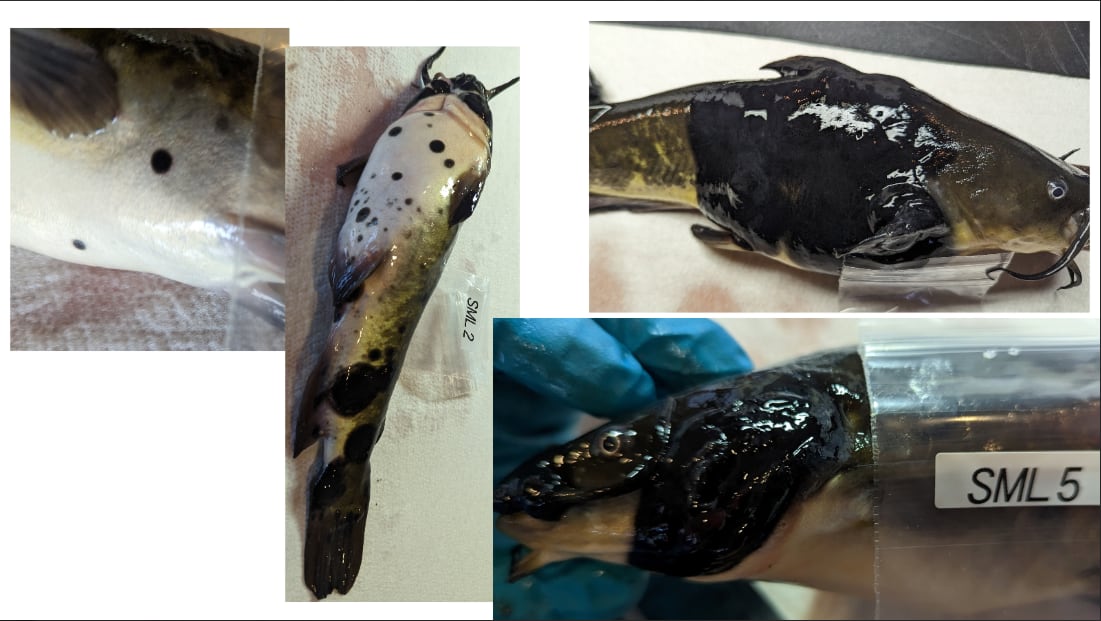
These images illustrate various appearances of black lesions on different fish, shared by researcher Vicki Blazer from the U.S. Geological Survey. Her research indicated elevated levels of seven toxins, including the carcinogen arsenic, in fish displaying these lesions. (Vicki Blazer)
She is currently testing infected fish for PFAS, another potential contaminant that could make them more prone to cancer.
Stephen Goff, a researcher at Columbia University who contributed to the shellfish cancer study but was not involved in this research, is convinced that the brown bullheads are afflicted with a transmissible cancer, citing the genetic evidence as “entirely compelling.”
What should you do if you catch a fish with tumors?
Funding for the study came from U.S. and Vermont governmental bodies, including the U.S. National Institutes of Health and the Great Lakes Fishery Commission. It also received support from Quebec’s Ministry of the Environment, whose personnel assisted in the collection of brown bullheads for research purposes.
Quebec’s Ministry of the Environment advises against consuming fish with tumors, despite the lack of evidence indicating it poses a risk to human health. Dragon mentioned that some residents in Vermont occasionally consume them and she believes they are safe for consumption.
Tumors have also been detected in catfish from Quebec’s Lake Magog and several other lakes in Maine and New Hampshire. Anglers are encouraged to email photographs of any such catches from other bodies of water in Quebec to the Ministry of the Environment for monitoring purposes.