

On Thursday, Ottawa and Ontario are poised to finalize an agreement aimed at alleviating the regulatory challenges associated with major projects, including the roadway leading to the Ring of Fire, as reported by The Canadian Press.
Sources from both provincial and federal governments, who are not permitted to speak publicly, have indicated that Ottawa will remove any redundant tasks related to its impact assessments for large-scale initiatives.
A preliminary agreement available on the Impact Assessment Agency of Canada’s website states the intention to collaborate under the “One Project, One Review and One Decision” framework.
Webequie First Nation and Marten Falls First Nation are spearheading environmental evaluations for three proposed roads that would link the provincial highway system to their localities and mining operations in the mineral-rich Ring of Fire area in northern Ontario.
In a supplementary arrangement concerning the Ring of Fire roads, the federal government has pledged to synchronize its impact assessment timeline with that of the province’s environmental evaluation, as both First Nations are planning to commence road construction in 2026.
No comments were received from either the provincial government or Ottawa when approached for statements.
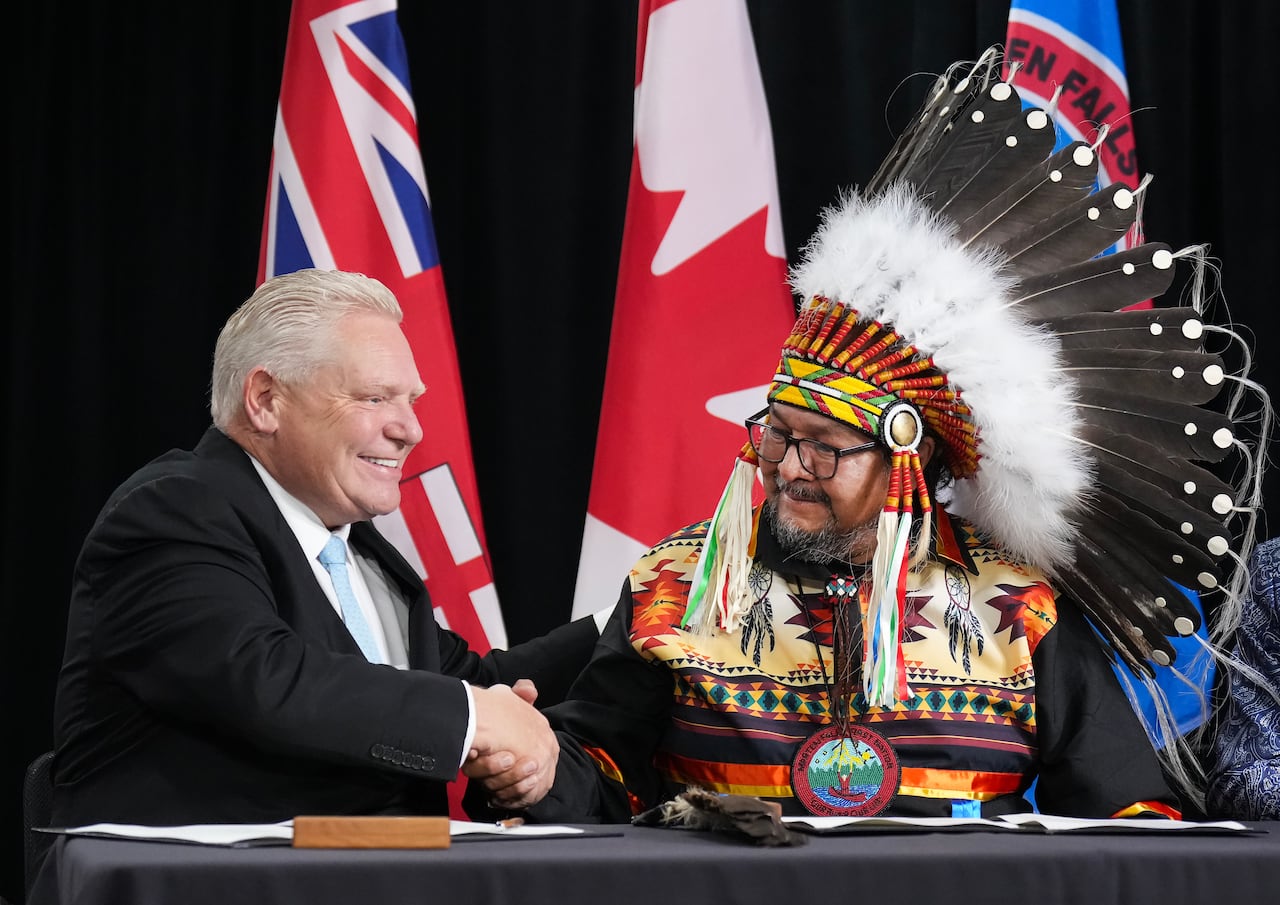
Ontario Premier Doug Ford, left, signs a partnership deal with Marten Falls, First Nation Chief Bruce Achneepineskum regarding the Ring of Fire at Queen’s Park in Toronto, Thursday, Nov. 27, 2025. (Nathan Denette/The Canadian Press)
A signing ceremony is scheduled for Thursday in Ottawa, where Prime Minister Mark Carney and Ontario Premier Doug Ford will execute the agreement.
The Canadian Press acquired details during a recent visit to the Ring of Fire region, part of an investigative project backed by the Pulitzer Centre.
Both Webequie and Marten Falls assert that the roads will help elevate their fly-in communities from poverty, although some nearby First Nations oppose the initiative.
A source from Ford’s office, restricted from making public statements about the yet-to-be-announced agreement, noted that these modifications will significantly expedite large projects throughout the province, including roads, highways, and mining operations.
“This is monumental, not only for the Ring of Fire but also for the mining sector, as well as for road and highway construction,” the source from the premier’s office stated. “It will be tenfold more transformative than any major undertaking.”
-
Ontario’s Ring of Fire ads lack footage of the mineral-rich region. Is that a problem?
-
Ontario signs nearly $40M deal with another First Nation in Ring of Fire region
A high-ranking federal source, also not authorized to comment publicly about the agreement, emphasized that the focus is on minimizing redundancy. The source assured that standards will remain rigorous, and rights and protections will be maintained, particularly concerning the roads leading to the Ring of Fire.
The federal government has initiated a regional assessment working group to gain a better understanding of development impacts, but both the province and the First Nations assert that this will not hinder the road projects.
The two levels of government intend to collaborate on assessments related to navigable waters, species at risk, and migratory birds, all of which have traditionally fallen under federal jurisdiction.
With these agreements in place, the province is not expected to invoke contentious new powers to classify the road to the Ring of Fire as a special economic zone. Such a measure would have enabled the province to bypass provincial and municipal regulations to expedite the construction of a proposed mine in the Ring of Fire.
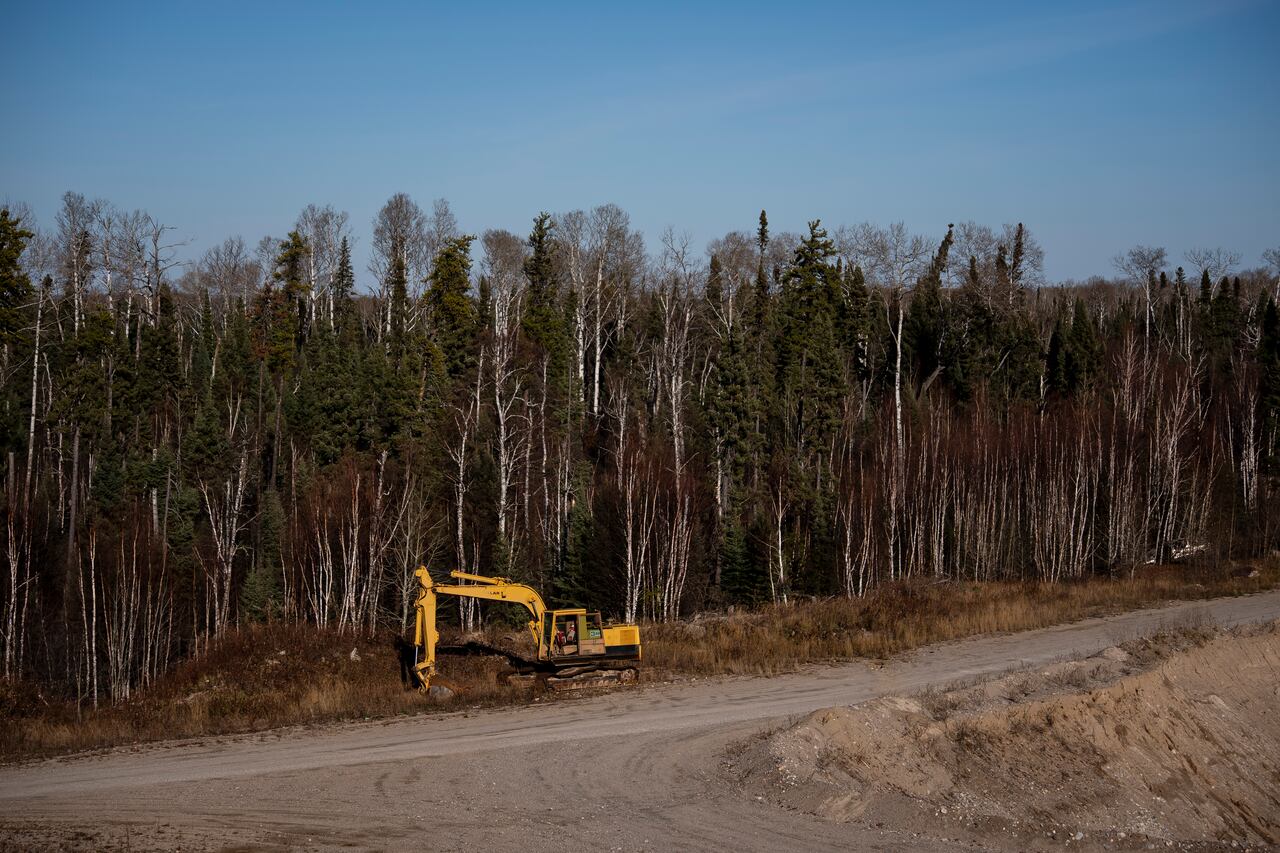
Some First Nations in the area are against development in the region, despite it being replete with critical minerals. (Christopher Katsarov/The Canadian Press)
Although the region is known for its abundance of critical minerals, numerous other First Nations oppose any development in the area, including the proposed roads and the mine they would facilitate.
Wyloo, the Australian mining corporation, is close to finalizing its feasibility study for two interconnected underground mines at its Eagle’s Nest location.
The majority of the over 40,000 claims staked in the Ring of Fire are owned by Wyloo and Juno Corp., a Canadian junior mining firm established in 2019. Teck Resources, which has recently merged with Anglo American, and Canada Chrome Corporation, also possess a considerable number of claims.
These companies assert that they have discovered a diverse array of critical mineral and base metal deposits, including nickel, copper, chromite, titanium, platinum, vanadium, iron, and gold. These materials are utilized in the production of various items such as batteries, smartphones, stainless steel, semiconductors, drones, satellites, data centers, and computers.
In the meantime, Ontario has finalized regulations that will enable the establishment of special economic zones, which are set to take effect on January 1, 2026.
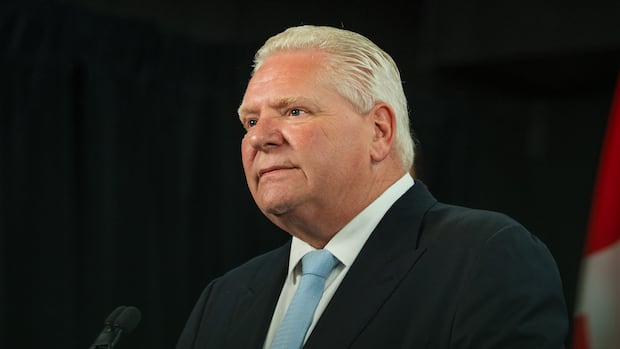
The Ford government has been receiving criticism from Ontario’s opposition parties, as well as environmental and Indigenous leaders on their controversial Bill 5. CBC’s Mike Crawley breaks down what you need to know about the legislation.
This was a crucial element of Ontario’s Bill 5 omnibus package, which was enacted last spring. The province granted itself the authority to suspend all provincial and municipal regulations to expedite the construction of significant projects, particularly mining operations.
Ford has also suggested using this power for his proposed traffic and transit tunnel beneath Highway 401.
The proposal of special economic zones has triggered backlash from many First Nations across the province, who perceive it as a risk to their traditional way of life.
-
Ontario to make Ring of Fire a special economic zone ‘as quickly as possible’: Ford
-
Ontario government signs agreement with Webequie First Nation for road to Ring of Fire
The new regulations empower Economic Development Minister Vic Fedeli to identify which locations might be classified as special economic zones, as well as designate trusted proponents and specific projects for this classification.
These decisions will require cabinet approval before implementation.
“Special economic zones will enhance Ontario’s economic standing by reducing bureaucratic hurdles, expediting approvals, and safeguarding the jobs and industries that maintain our province’s resilience and competitiveness,” Fedeli stated in a release.