

An agreement has been established between the federal government and the provincial government of New Brunswick to enhance the coordination of their environmental impact assessments.
“This initiative will provide major project developers with the clear guidance they require while eliminating unnecessary duplication, all without compromising the strength or integrity of our environmental impact assessment procedure,” stated New Brunswick Premier Susan Holt during the announcement made on Tuesday.
She emphasized the province’s dedication to safeguarding its “stunning landscapes,” asserting that the provincial environmental impact assessment process is “thorough and well-established.”
“We are delighted that the federal government has acknowledged the robustness of our province and has partnered with us to minimize duplication and redundancy, ensuring a unified process,” she remarked.
According to Holt, the assessment will be conducted by an expert review panel that incorporates local, provincial, and federal agencies, describing it as a one project, one review strategy.
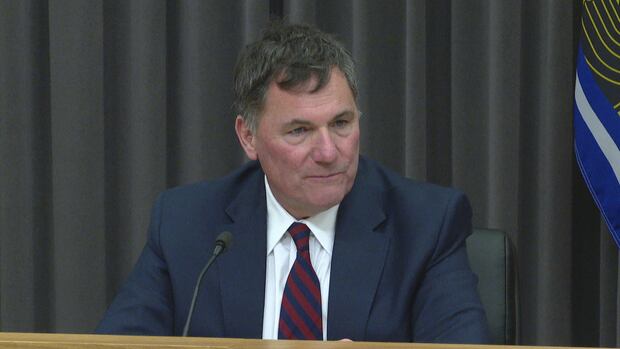
The agreement will facilitate collaboration between the two levels of government on environmental impact assessments, eliminating the need for separate reviews.
Holt also noted that First Nations will participate in the assessment process.
Dominic LeBlanc, the federal minister of internal trade and a Member of Parliament from New Brunswick, remarked that the province is the first to formalize such an agreement since the federal government initiated discussions during the summer.
“With global trade evolving, Canada is taking decisive measures not only to respond to the critical moment we are in but also to bolster Canada’s economy across the nation,” LeBlanc stated.
“Effective immediately, when a significant project in New Brunswick requires both federal and provincial assessments, the processes will no longer overlap.”
New Brunswick’s Environment Minister Gilles LePage expressed that the agreement will offer greater clarity to project proponents throughout the environmental assessment phase.
“By collaborating and sharing our knowledge, resources, and responsibilities while placing trust in each other, we create meaningful change that benefits everyone,” LePage stated.
When reporters inquired about the potential for reduced scrutiny of projects, Holt assured that they would still be closely monitored and subject to the same rigorous standards during the new review process as they were previously.
“The same number of reviewers, to use your analogy, can assess a specific review simultaneously,” LeBlanc added. “It doesn’t need to be done in sequence.”
Holt clarified that the announcement does not affect the Sisson Mine project located northwest of Fredericton, as it has already received approval and is required to meet specific conditions for the completed environmental impact assessment.
When queried about which projects might be influenced, Holt referenced the Mount Pleasant mining project at Lake George.