

Dominic LeBlanc, Canada’s Trade Minister, has indicated that opportunities are available for U.S. officials to renew discussions regarding trade with Canada. However, the next significant moment for direct trade dialogue is anticipated to coincide with the upcoming review of the North American Free Trade Agreement, set to commence next month.
LeBlanc stated on Sunday morning, “Should there arise a chance during those discussions for the Americans to consent to something beneficial for both their interests and Canada’s economic needs, we are fully prepared to engage in that work.”
Officials from Canada, the U.S., and Mexico are preparing for the review of the Canada-U.S.-Mexico Agreement (CUSMA), which provides essential protection for Canada against a number of tariffs imposed by U.S. President Donald Trump.
In spite of the trade agreement, Canadian exports of steel and aluminum continue to face tariffs of 50 percent, while certain automotive exports and kitchen cabinets are subjected to tariffs of 25 percent.
Discussions were in progress to alleviate the steel and aluminum tariffs, yet Trump halted those talks in October due to an anti-tariff advertising campaign initiated by the Ontario government.
LeBlanc expressed that Canada felt it was making headway with the U.S. and that discussions would eventually extend to automobiles and softwood lumber; however, Trump “chose to suspend those negotiations, which is unfortunate.”
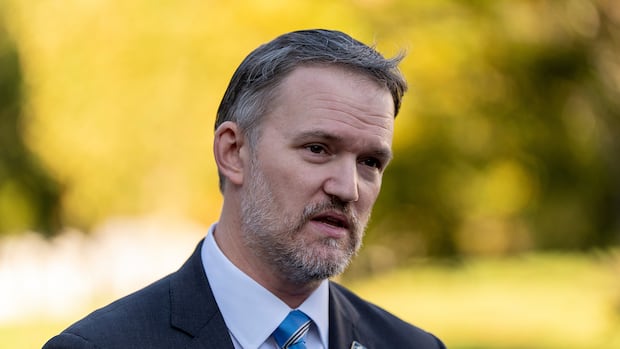
Jamieson Greer, the lead trade negotiator for U.S. President Donald Trump, has suggested that the administration is contemplating the possibility of separating the three-way free trade agreement with Canada and Mexico in favor of distinct deals.
“Securing a deal that favored Canadian workers and businesses would have been vital for the Canadian economy,” LeBlanc further remarked.
Regarding the forthcoming CUSMA review, it remains uncertain if the U.S. intends to uphold the trilateral agreement or if it is inclined to pursue separate bilateral agreements with Canada and Mexico, as some U.S. officials have suggested.
-
Canada’s ambassador to the U.S. states that the Trump administration won’t dismantle CUSMA.
-
Trump’s trade representative suggests separate agreements with Canada and Mexico.
On Thursday, Canada’s ambassador to the U.S., Kristen Hillman, played down indications from the Trump administration regarding the potential dismantling of the trilateral agreement, asserting that she hasn’t “received any signals from the U.S. indicating a desire to alter that foundation.”
Hillman remarked, “I don’t perceive this as a cause for concern. A stable, predictable, and manageable trade relationship among our three nations is crucial for our collective prosperity. This is what reassures me that this treaty will endure.”
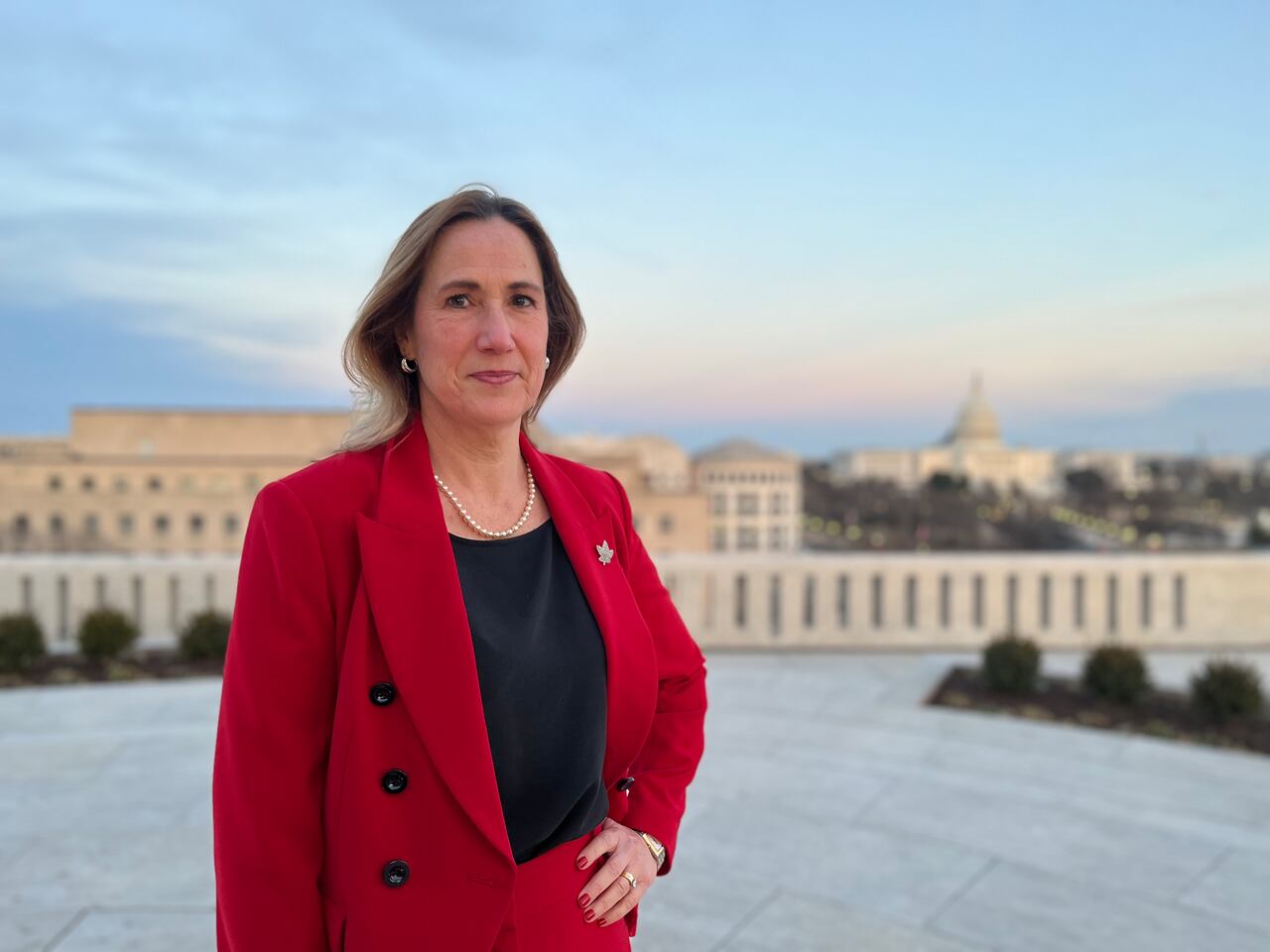
Kirsten Hillman, Canada’s ambassador to the U.S. and lead trade negotiator with Washington, has not received any signals from the Trump administration indicating a desire to change the core elements of the Canada-U.S.-Mexico Agreement. (Jennifer Chevalier/CBC)
By July 1 of next year, all three nations must express their intentions regarding the extension of the agreement, whether to renegotiate its terms, or to allow it to lapse.
Under U.S. regulations, Trump’s chief trade negotiator, Jamieson Greer, is required to submit a report to Congress by January 2 outlining the administration’s strategy for the trade agreement.
Any nation can announce its intention to withdraw from CUSMA at any time by providing six months’ notice.
LeBlanc acknowledged the public remarks made by U.S. officials but mentioned that private discussions are “far more reassuring” regarding the anticipated outcomes of the CUSMA review.
“This is not a renegotiation; it is a review. We are hopeful that the Americans will maintain their stance,” LeBlanc stated.
Poilievre criticizes Carney’s approach to trade discussions
In a Sunday morning interview with CBC’s Rosemary Barton, Conservative Leader Pierre Poilievre criticized Prime Minister Mark Carney for his management of Canada-U.S. trade discussions, asserting that the prime minister presented himself as the optimal individual for the task but has failed to fulfill that promise.
When questioned about his alternative approach, Poilievre emphasized that Canada should negotiate from a position of strength, which includes advancing natural resource projects to boost oil and gas exports to international markets and reduce dependence on the U.S.
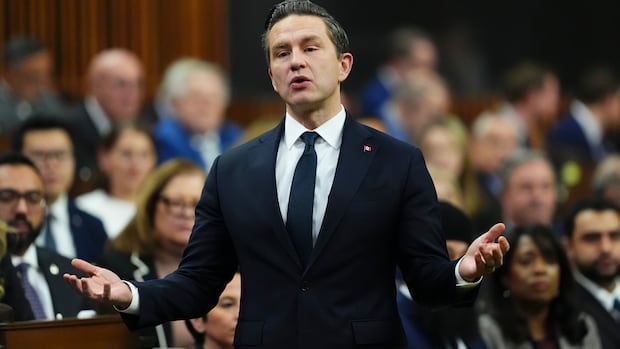
CBC News chief political correspondent speaks to Conservative Party Leader Pierre Poilievre about his leadership following Michael Ma crossing the floor to join the Liberals. They also discuss the Ottawa-Alberta agreement that lays the foundation for a new oil pipeline.
“Then you can approach the president and say, ‘At this point, we’re exporting our resources to Asia and Europe,'” Poilievre added. He also accused the Liberal government of hindering these projects.
In response to Poilievre’s statements, LeBlanc noted that the federal government has an agreement with Alberta’s government that facilitates an oil pipeline to British Columbia in return for Alberta enhancing its industrial carbon tax and other measures.
“We believe there is a viable pathway for the pipeline that aligns with economic, environmental, and social considerations. However, it requires significant effort — we all have substantial work ahead,” LeBlanc commented.
“As a nation, we cannot turn a blind eye to the responsible economic success of the energy sector in western Canada.”