


Conservationists in Northern California were initially concerned when a male condor appeared motionless for an extended period after a transmitter alert.
The situation turned out to be a positive development.
Chris West, a wildlife biologist from the Yurok Tribe Wildlife Department, revealed to As It Happens host Nil Köksal, “He was just so well positioned on an egg, actively incubating.”
While there is no visual confirmation of the egg, the behavior of the male and female condors suggests that they are taking shifts to safeguard a nest hidden deep within the Redwood National and State Parks and nurture its valuable contents.
If their assumption is correct and the egg successfully hatches, it would mark the first wild-born chick of its kind in Northern California in approximately 130 years.
This milestone is significant for the Yurok Tribe, which has collaborated with federal and state authorities for almost two decades to reintroduce condors to the area following their near extinction due to colonial activities.
“The sight of these two birds engaging in natural breeding behaviors and potentially producing the next generation of wild condors for the region is truly remarkable,” remarked West, who oversees the Northern California Condor Restoration Program.
Introducing the First Wild Breeding Pair in the Region
Historically, California condors, among the world’s largest flying birds, thrived along the west coast spanning from British Columbia to Mexico. However, pressures such as poaching, habitat destruction, and lead poisoning from ammunition severely impacted their population.
In the 1980s, only about 20 California condors survived in the wild. Today, through extensive conservation efforts, captive breeding programs, and rewilding initiatives, their population has grown to 392 individuals.
Within Northern California, where condors were reintroduced in 2022, only 24 of these majestic birds currently reside, offering hope that their numbers will rise with the presence of a potential breeding pair.
The female condor, A0, bred at the Oregon Zoo, is known as Ney-gem’ ‘Ne-chween-kah in Yurok, signifying “she carries our prayers.” Her mate, A1, hatched at the World Center for Birds of Prey and is named Hlow Hoo-letl, meaning “at least I fly!”
West’s team observed a budding connection between the pair last year when they frequently disappeared together.
According to West, “When we noticed a male and female of breeding age spending time away from the group, it raised suspicions, as condors are social creatures and typically remain in large social clusters.”
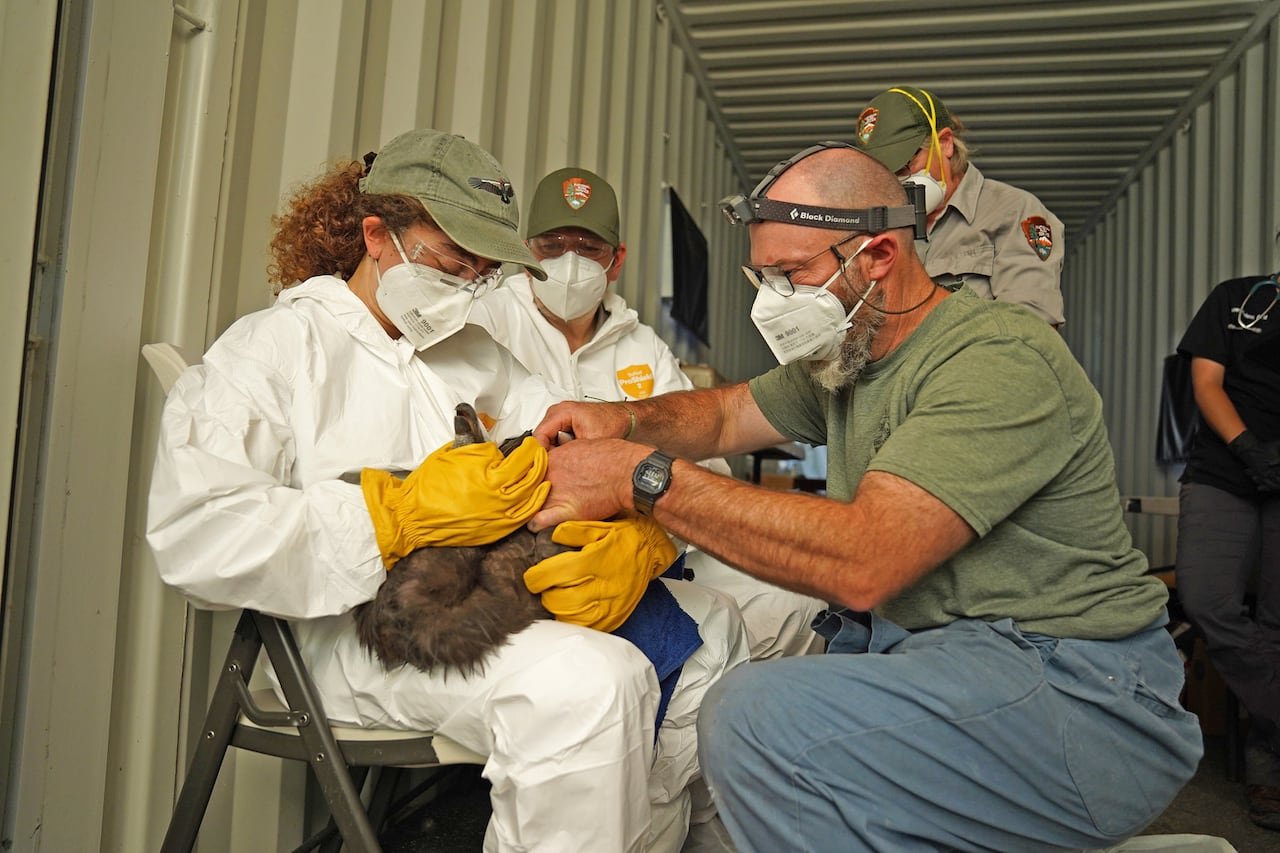
Condors lay only one egg annually, and the initial interactions between Hlow Hoo-letl and Ney-gem’ ‘Ne-chween-kah did not result in offspring.
This year, however, the pair resumed their courtship rituals and have secluded