

Young individuals without proper documentation in Canada express feelings of anxiety and despair as they encounter processing delays stretching into decades for permanent residency through the humanitarian and compassionate pathway—often the sole immigration option available to them.
Legal experts and advocates are concerned that an increasing number of at-risk minors may lose their legal immigration status in the upcoming years, forcing them into hiding and preventing them from legally working, attending many colleges and universities, or receiving medical care. There is also the possibility of deportation from Canada.
Individuals can become undocumented when their temporary status expires, which may occur if they do not qualify for a different status, if their application is rejected, or while waiting for their application to be processed, as explained by Ottawa immigration attorney Heather Neufeld.
As of October, some immigration pathways, including the humanitarian permanent residence (PR) route, have seen processing times extend to decades, a program that allows applications based on particular circumstances such as hardship or the welfare of children.
For these children, the threat is heightened, Neufeld emphasized.
“They face the risk of deportation before their humanitarian application is ever resolved,” she stated. “They risk being removed from perhaps the only country they have ever known, the only place they have ever considered home.”
In the meantime, annual admission quotas have been reduced at an unprecedented rate, according to legal professionals.
“This humanitarian stream was functioning well,” Neufeld remarked. “This has suddenly been disrupted by the Liberals deciding to cut it … to an extraordinarily small number each year—unlike anything we’ve ever encountered.”
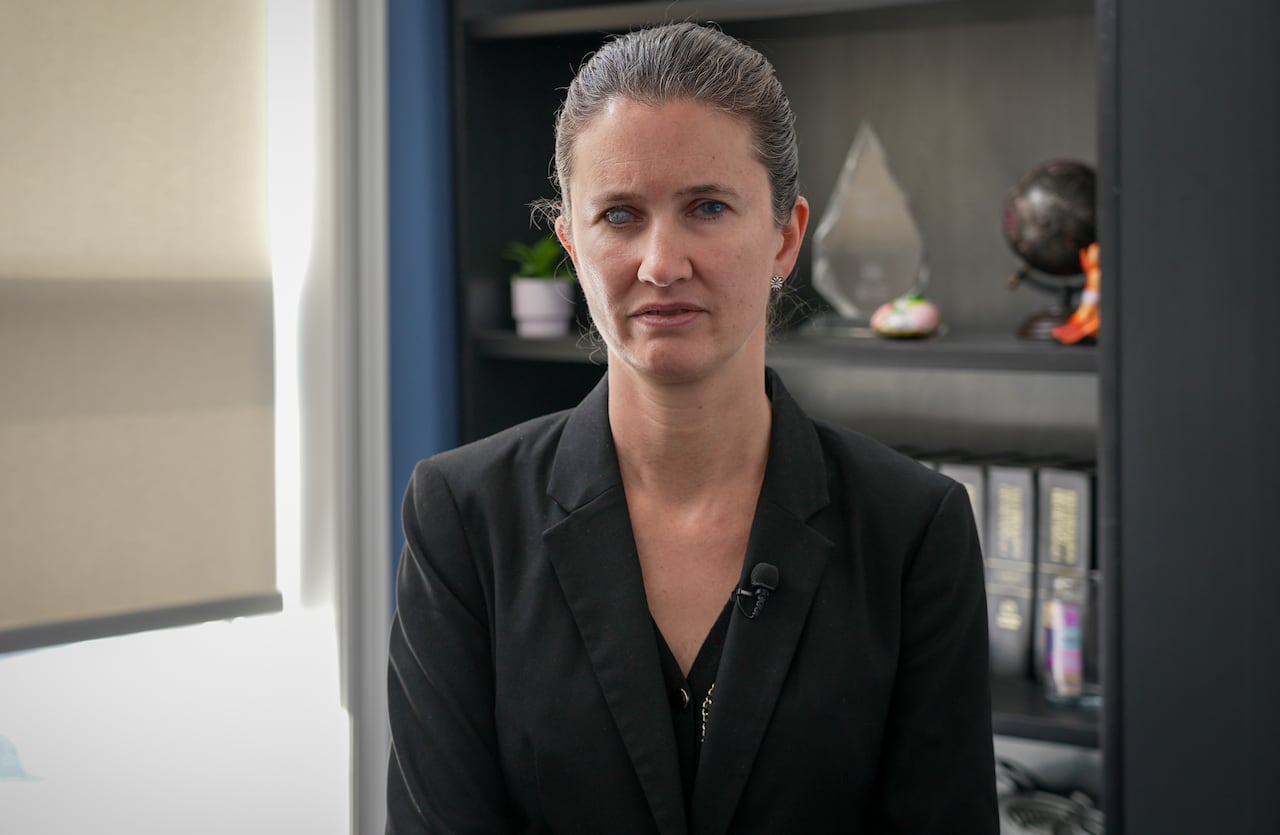
Heather Neufeld, an immigration and refugee attorney based in Ottawa, represents young clients currently without legal status while they await the processing of their humanitarian and compassionate applications. (Mathieu Deroy/CBC)
Recent estimates indicated that there are 55,074 applications pending within the humanitarian stream.
For the next year, Canada aims to accept 1,100 applicants through the humanitarian program, followed by 1,000 in 2027 and another 1,000 in 2028, according to the latest plans from Immigration, Refugees and Citizenship Canada (IRCC).
‘It’s very stressful’
“This is my home,” shared Anna, a high school student from Kingston, Ont., who is currently undocumented.
Anna is not her actual name, and CBC is safeguarding her identity as she is a vulnerable minor facing deportation risks.
She arrived in Canada as a young child, but now at 17 years old, she lives separately from her family due to deteriorating relationships.
“It’s very stressful, like, not knowing that you could just be uprooted at any point,” Anna expressed.
I couldn’t really live the regular teenager life.John, an undocumented youth in Ottawa
Although her immediate family and some relatives are Canadian citizens or permanent residents, Anna learned years ago that she lacks legal status in Canada due to a complicated and troubled family background.
“I first discovered it when I was seeking housing and trying to connect with services,” she recounted. “They couldn’t assist me in the same way they helped other children.”
With the assistance of a legal aid attorney in Ottawa, Anna submitted her application for permanent residency in October through the humanitarian pathway—the only option available to her now.
At the time of her application, the estimated wait was two years, but soon after, it surged to over 10 years.
“I was in tears,” she remembered.
Anna mentioned that she is diligently working and intends to graduate from high school in two years, followed by applying to nursing school.
“I’ve performed CPR on someone who was overdosing, and it’s just a really rewarding feeling … to assist someone,” Anna stated. “So I want to do it properly.”
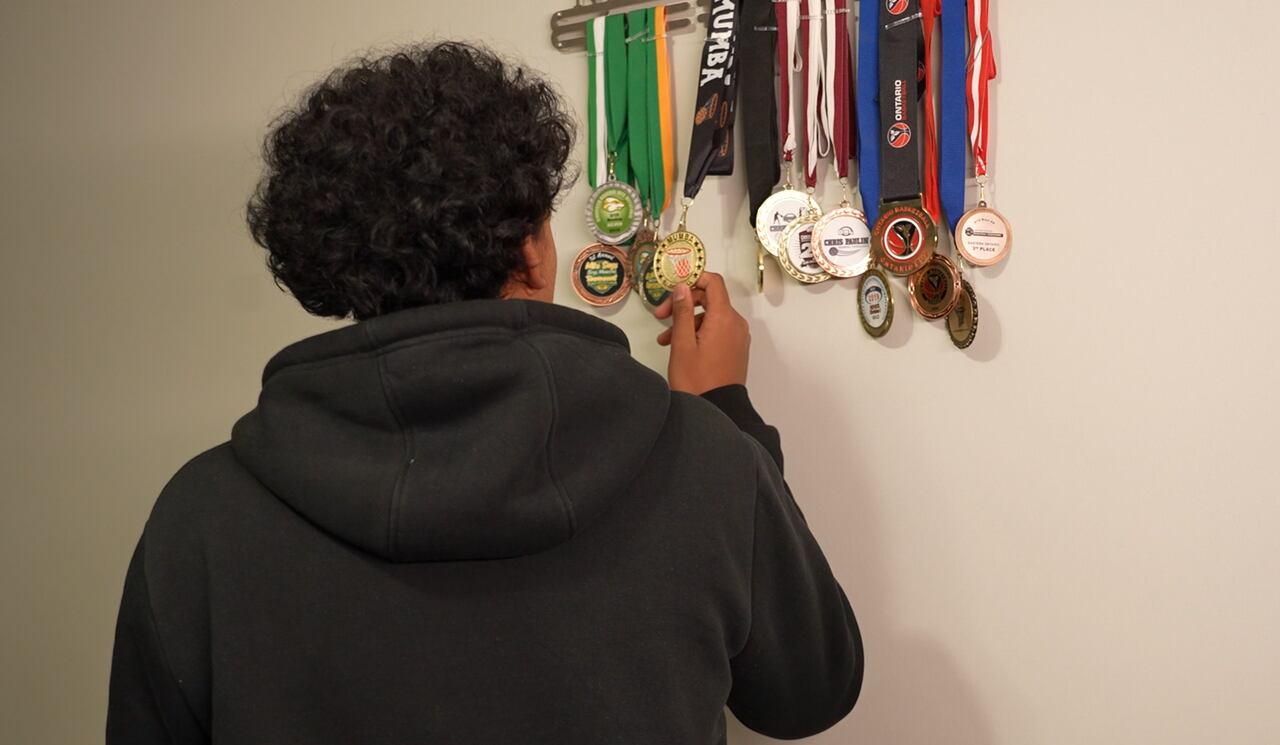
John, an Ottawa youth whose identity CBC is protecting because he’s undocumented, looks at the medals he won playing basketball. He’s been unable to travel with his team to tournaments in the U.S. because of his precarious immigration status. (Jodie Applewaithe/CBC)
In Ottawa, 16-year-old John and his younger sibling share similar concerns. Like Anna, CBC has assigned John a pseudonym and is safeguarding his identity due to his current lack of legal status and the risk of deportation.
John’s parents arrived in Ottawa for diplomatic roles while he was a toddler, but years later they sought to apply under the economic PR stream. The family lost their status during the COVID-19 pandemic when their application became mired in bureaucracy. They have since reapplied through the humanitarian program.
“It really hit me last year,” John remarked, noting that he was unable to obtain his driver’s license because of his uncertain immigration status.
For the same reason, he has also been barred from joining his team in basketball tournaments in the U.S.
“I couldn’t really live the regular teenager life,” he said. “I feel like I was lagging behind in life.”
Now, John expresses concerns about his aspiration to study engineering if the PR process takes a decade or longer.
“It’s a bit disheartening … and I hope it changes,” he stated.
Neufeld, the attorney representing the family, noted that they “did everything right,” yet still fell through the cracks.
Canada’s obligation
Neufeld asserts that Canada is obligated under both the UN Convention on the Rights of the Child and its own immigration laws to act in the best interests of children.
“We are essentially neglecting our duty to prioritize children’s best interests by postponing [their immigration status] far into the future,” she stated.
Neufeld, who also serves as an executive member of the Canadian Association of Refugee Lawyers, is among those urging the IRCC to prioritize vulnerable youth cases and hasten the initial approval process so they can at least obtain work and study permits while awaiting resolution.
“[Otherwise], we risk becoming like the U.S., with an underclass of undocumented individuals whose talents, skills, and potential contributions to society we are wasting,” Neufeld cautioned.
Liz Okai, manager of the Child Welfare Immigration Centre of Excellence (CWICE), mentioned that her organization has been assisting an increasing number of unaccompanied minors from nations such as Ukraine, many of whom are at risk of losing their legal status due to Canada’s untenable wait times.
“It was no fault of theirs,” Okai remarked, emphasizing that children find themselves in these situations because of decisions made by adults.
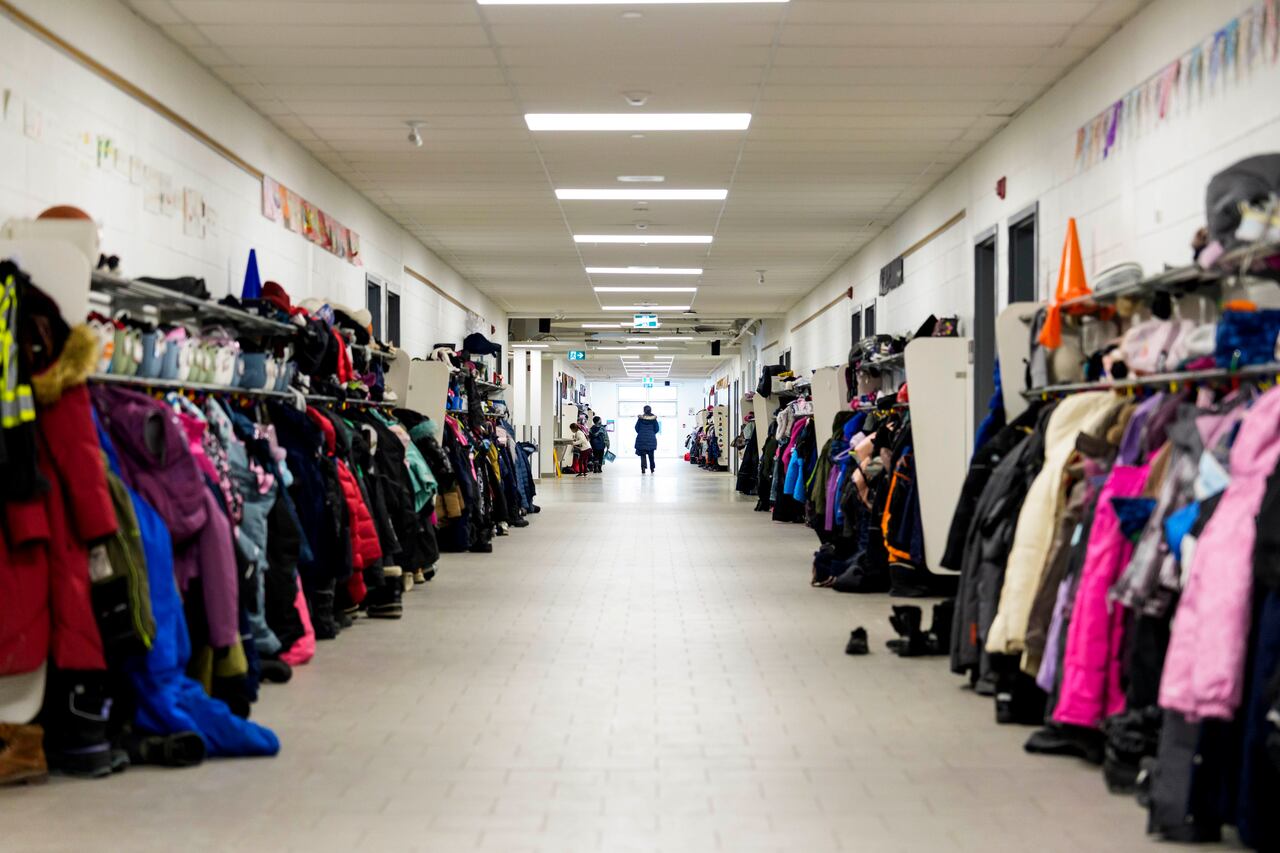
Jackets line a hallway at an Ottawa public school. Liz Okai, manager of the Child Welfare Immigration Centre of Excellence, states that children face heightened risks when they lose their immigration status. (Justin Tang/CP)
Okai stated that this state of uncertainty can adversely affect a young person’s mental and physical well-being, particularly when it obstructs access to essential services.
“You’re leaving them in limbo. There’s uncertainty, and fear,” Okai expressed. “Their peers are moving forward while they are stagnant.”
Humanitarian pathway a ‘last resort’
In a statement to CBC, IRCC described the humanitarian and compassionate pathway as a “last resort” for “exceptional cases that have exhausted all other options.”
When questioned about how vulnerable youth are expected to endure waits exceeding 10 years, the department reiterated that the posted processing times are intended to provide applicants with “a more transparent and predictable experience.”
“While not conclusive, the best interest of the child is a significant factor in all [humanitarian and compassionate] cases involving minors,” the department stated, adding that officials consider a child’s “emotional, social, cultural, and physical welfare” when making decisions.
“Applicants may request urgent processing under specific circumstances. A letter of explanation along with supporting documents is required. Each request is assessed individually,” the IRCC explained.

Due to her undocumented status, Anna will be unable to apply for post-secondary education or work while awaiting the processing of her permanent residence application. (Daniel Taekema/CBC)
Anna mentioned that she is currently focused on her studies while keeping herself occupied with babysitting and cleaning jobs, but she is aware that she might soon find herself in a prolonged state of uncertainty.
“I’m scared … because if I finish school, then I’m not going to have anything to do,” she expressed. “[It’s] like a moment of losing hope.”